-
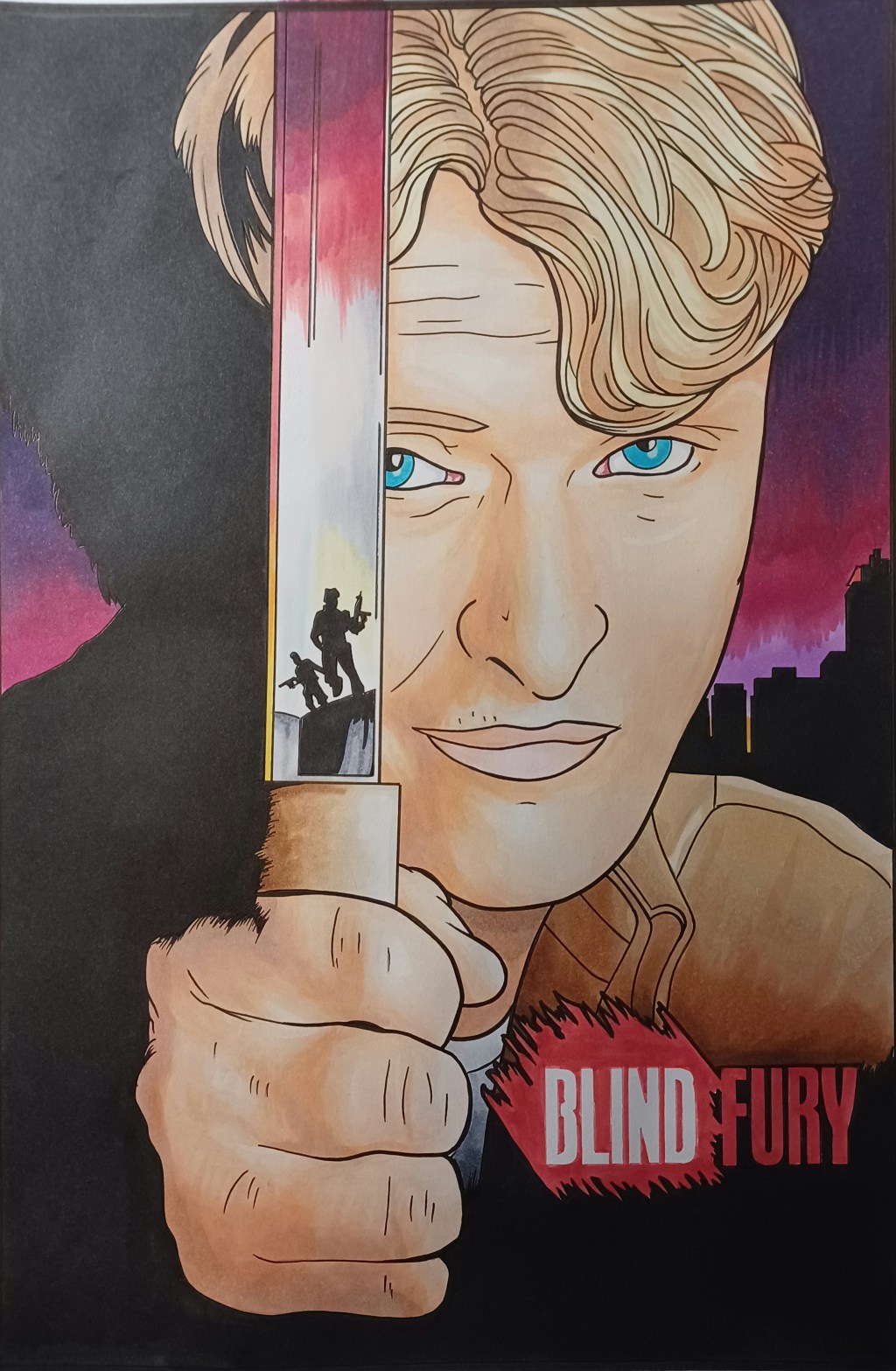
The American Zatoichi is Dutch.
We all have those artists, illustrators, musicians, actors, screenwriters, authors, directors and so many others, that we all love and admire. It might not be the person themselves, but their output strikes a chord and you wait with baited breath for their next creative endeavour to be released.
As you already know, either from reading this weird little blog or if you know me in the always disappointing ‘real life’, that film is an obsession of mine. Has been that way ever since I was a youngling. So, those creative minds who’s next thing I was waiting for was always actors and directors (and sometimes studios). I always preferred the oddball and twisted, but I craved anything that got my attention. And all I wanted in life was to be one of those luminaries that created that kind of entertainment. The fact that I didn’t, and gave up so many of my dreams is a much sadder story that I won’t tell you here, for its too depressing and this shit should be fun.
Much of what I still love came from the ‘mesmerised by the TV’ era of my life. I found my favourite director John Carpenter in these early years, two of my favourite actors of all time in Kurt Russell and Gena Davis, and I learn the language if film from watching everything I could.
But out of all the wonderful actors I discovered back then, there is someone in the worldwide, multigenerational filmmaking community, that over the years, has encompassed more enjoyment, fun turns, chilling and thought-provoking performance that anything other. Appearing in every genre of film, both high-brow pictures and B-movies, good and bad. And if you are a cinephile and if you haven’t seen one of his movies, you need to hand in your nerd card and sit in the time-out corner until you HAVE seen them. I am talking of Dutch power-house, Rutger Hauer.
I remember how I felt watching Hauer as the replicant Roy Batty in Blade Runner (still a personal favourite of mine) for the first time. It’s the first time I realised that villains aren’t necessarily ‘bad guys’, that there could be levels of grey in a character. Something he would use again in a very different film, the swashbuckling romantic adventure film Ladyhawk where he played the hero. Oddly enough, Hauer appeared in that after another favourite actor of mine, Kurt Russell, dropped out. And Hauer playing the mysterious and murderous hitchhiker in The Hitcher, is still chilling to this day and still is a film I have very in-depth conversations about. I am mesmerised by this film, seriously. It’s well worth checking out.
He seems to effortlessly inhabit any character’s skin. You believe every line delivery, every look and expression, every movement. And with so many iconic and cult roles under his belt, the influences he has had on filmmakers and pop culture in general, and all the people he has helped with his charitable organisations, you would expect him to be a bigger star. I mean he is known. He is instantly recognisable. He never seemed to have that ‘breakout role’ that made him explode in popularity. He was at home head lining smaller films and independent films, and had smaller roles in larger movies. But personally, I like Rutger Hauer preferred it that way. To paraphrase the song, doing it his way.
Okay, a little side note here. Somewhere around the early 2000s, I made a list of actors I loved to watch that I thought where always amazing, where always working, but never got the attention or praise that they deserved. I called this list, The Unholy Few. Because I have a twisted sense of humour, and many of these performers played villains effortlessly. Actors like Lance Henriksen, Eric Roberts, Jeffery Combs, Christopher Lambert, Michael Biehn, Cynthia Rothrock, Pam Grier and Linnea Quigley. But the person always at the top of the list was Rutger Hauer. Okay, now back to the story.
The first time I remember Mr Hauer, the first time I stood to attention and remembered his name, was in the far away year of 1990, with the action-adventure comedy Blind Fury. The film had just been added to the New Release section at the video store and I had read the review in the free magazine that the rental stores had back then, and I thought it looked like a lot of fun. It took me two weeks of begging my parents before I was able to rent it. And I’m so glad they relented to their annoying and persistent son, because the little 12-year-old that I was loved it. I thought it was the best thing ever. It was the film that caused me throughout the 90s, to search out his films. But I think I watched Blind Fury more than any other through my teenage years. I knew every line and delivery from every actor, memorized to music and the editing, and the shot compositions were burned into my little head. And they still are to this day.
Things where pretty tough for me when I was a kid. It wasn’t until I left home that I would begin to fix myself (something I am still doing). I know this may sound strange to some of you, but Blind Fury is the film that made me want to fix myself, to use the broken parts of me to create something greater than those out there who were whole. I would often fantasize about Rutger Hauer’s character of Nick Parker being my real dad. He would come and find me; he would teach me what he knew and we would go off and have adventures together. I can close my eyes now and feel how those daydreams made me feel back then. And they always bring a smile to my face and a tear to my eye.
At this point, if you haven’t seen this film, WHY NOT? Go watch it now. Go on. I’ll wait.
All done? Okay, let’s go on.
So, what is the movie about? Hey, I’m just getting to that now. Don’t be in such a hurry.
So Blind Fury is a 1989 action film from director Phillip Noyce. Yes, that Phillip Noyce (this is where I pause for you to look him up). The film opens up in the aftermath of a battle in the Vietnam War. Our hero, Nick Parker, is bloodied and is stumbling through the jungle blinded by the violence. After being caught in a trap, he is rescued by villagers and nursed back to health. Realising that he is blind, they teach him to use his other senses and to defend himself. And they teach him to use a sword which is conveniently hidden in a thick cane. This is a pretty touching opening pre credit sequence. The villagers actually want to help him, and he learns to be whole. He becomes part of the community. And the best thing is, the filmmakers don’t beat you over the head with anything, letting the beauty of the scenes play out. And hardly a word is spoken.
Then we cut and the credits begin.
After returning to the United States, a good twenty years after the pre credits sequence, we see Nick walking down a highway in Florida with is cane. He beats a crushed beer can out of the way, stops and then jumps over a dog turd, then his cane taps against an alligator just chilling at the side of the road. Nick smiles and comments with a ‘Nice doggy’ before walking around the sleepy reptile.
Nick stops for lunch, and after seemingly to be tricked by some bullies, jokingly mocks them. And they basically ignore him after that. That is until they start harassing a young woman in the restaurant, Nick saves the day and takes out (Not killing, just humiliating) the thugs using his blindness to catch them off guard. Essentially Three Stooges’ them. It is a very ‘slap stick’ sequence and to the casual observer, the thugs were their own worst enemies here. This opening mirrors the rest of the film in a way. While there are heavier moments and weightier themes in the film, there is also a lightness and a sense of fun throughout. This is an action comedy after all, both the main thematic elements have to be address, need to be addressed, for this to work. This sequence and the pre credit sequence do that wonderfully. And the best part, the comedy doesn’t hold your hand and say, ‘Look this is funny’ and doesn’t do it at the expense of the more tense and dramatic moments. The situations and reactions are enough. Hope you listening Hollywood.
The reason Nick is back is to track down this old army buddy, Frank Deveraux (played by Terry O’Quinn). He finds his way to Frank’s house where he meets Frank’s Ex-wife Lynn and son Billy (Meg Foster and Brandon Call). Here he finds that Frank has divorced his wife, moved out and now lives in Reno, Nevada working at a Bio Tech firm.
What Nick and Lynn don’t know is that Frank has lost big at a casino and is being strongarmed by the owner, MacCready (Noble Winningham), to make a large shipment of designer drugs. And to make sure that he does, MacCready sends his main henchman, Slag (Randall “Tex” Cobb) to kidnap Billy.
“Are you expecting someone?”
“No. Why?”
“Because there’s someone at the door”
KNOCK! KNOCK!
Surprise, its Slag and two corrupt cops come to take Billy. This is where Nick does his Daredevil routine. After Billy is knocked out, and Lynn is shot by Slag after she tries to protect him, Nick kills the cops but Slag escapes. Before Lynn dies, she begs Nick to take Billy to Frank in Reno. And so, begins the road trip. Yay!
After catching a bus and starting their journey, Billy and Nick get to know each other. Even though Billy is difficult. Okay, have you ever heard of the concept of a ‘Kenny’ in film? No. Well, it refers to an annoying child character being one of the main focuses of the plot. For every good child character in a film, there’s at least two ‘Kenny’s. If you want a better idea of what a Kenny is, watch Brandon Tenold’s Gamera reviews on YouTube and it will all become clear.
Billy starts out as a little shit who I wanted to punch. The kid is dealing with a lot. Feeling abandoned by his father, always being sick, and now being transported to Reno by Nick and he doesn’t really understand why. While it is understandable, Billy does start out as a ‘Kenny’, but like all good characters, he learns on the journey and becomes an interesting character we care about. And it started after he and Nick stop at a rest stop on their trip.
Billy tries to call his mom to tell her she is okay. Nick has to stop him, and then tells Billy what happened and that his mother is dead. Distraught, Billy runs off into the cornfield surrounding the rest stop. Nick follows. But Slag has tracked them down here and finds Billy first (popping out of nowhere) and holds the boy in an old shack while the redneck/hillbilly locals Slag hired to kill Nick, go after the ‘blind man’.
Spoiler alert: They all die.
Well, except for Slag, who survives. And after rescuing Billy, Nick is now ‘Uncle Nick’. The action sequence in the corn field is a highlight for me. I love how Nick uses sound and smell to take out these thugs. And they don’t even see it coming. Always makes me smile.
After camping rough and hitching a ride, Nick and Billy make to Reno and to Frank’s apartment. Here they meet Annie, Frank’s girlfriend, who agrees to take them to Frank. But more of MacCready’s men are waiting inside, Lyle and Tector (not joking, that is a name in this film) and they are all captured. They are all bundled into a van, they escape, then there is a pretty fun and chuckle worthy chase scene. But they give them the slip and hide out at Colleen’s house, a friend on Annie’s. And leaving Annie and Billy here, Nick goes for Frank.
After causing a devastating riot in the casino, Nick gets to the room at the top of the hotel where the villains are holding Frank. Nick and Frank have a touching reunion, they then burn the lab, steal the drugs and get out. Upon to returning to Colleen’s, Nick and Frank find her dead and Annie and Billy missing. Colleen’s phone rings and its MacCready who tells them to bring the drugs to a mountain lodge to exchange Annie and Billy for the drugs.
Nick and Frank know it’s a trap. I mean, it’s the climax to an action movie, of course is a trap. Villains are going to villain, after all. So, our heroes prepare. And after more touching dialogue between old friends, they ‘storm the castle’. They take out the bad guys and go for MacCready. But they find him holding a gun on Billy. Drugs are given over, but before the loved ones are released, MacCready introduces them, to a Japanese assassin hired to kill Nick. And cue the amazing sword fight between blind swordsman and ninja.
Another Spoiler Alert: Nick wins. (Duh!)
And there is the ‘It is not over yet’ moment and Slag pops up out of nowhere and shoots Nick, hitting him in the shoulder. Nick then throws his sword and impales Slag against the wall. Slag pulls out the sword and goes for this gun. Nick using the assassin’s sword slashes Slag across the midsection, sending him out the window where he splits in two as he falls to the ground below. Didn’t that happen in the last film I covered? Well, at least it wasn’t Ronny Cox’s rubbery arms from the end of Robocop.
Anyway, Frank is reunited with Billy and Annie. And later when they are all boarding a bus for San Francisco to start a new life, Nick drops his ticket and steps out of line, instead choosing to move on alone and give the new family time to heal and bond. Nick then walks off down the highway like an old gunfighter walking into the sunset.
Roll Credits.
The film was produced by actor Tim Matheson, along with his producing partner Daniel Grodnick. They purchased the rights to remake the series and the character Zatochi from Japan for the American audience. Matheson, in particular was a huge (almost over weight) fan of the Zatochi series, and some of the material I found online seem to point to the fact that Matteson himself wanted to take up the mantel of the blind swordsmen. But for whatever reason he took himself out of the running and stayed committed to the producer’s role after Rutger Hauer became attached to the project. Which is a relief, because this is definitely Rutger’s film. But part of me is very curious about what Matheson could have brought to the role of Nick Parker. I think he could have puller it off. With comedies like Animal House, Up the Creek and 1941 under his belt, you know he could have handled the comedic aspects of the role. And with characters like Larry Sizemore from Burn Notice, he can be imposing and handle the action side of things. What I am saying, Tim could have done it well and made the role his own. But it might not have become the cult classic it is today. I think that is Rutger’s doing.
This film has a few notable firsts, and a few lasts connected to it as well. This is the first Hollywood studio film for Australian director Phillip Noyce after his critical and commercial hit Dead Calm. I couldn’t track down any information on how or why he got the job, just that he did and that is surprised a few people at the time. Noyce would go on to direct such multi-million-dollar projects like Patriot Games, Clear and Present Danger, The Saint, The Bone Collector and Salt. And this film seems to bridge the gap between the lower budget films and the bigger budget fare. But Noyce, to his credit, wasn’t slacking here. Its beautifully shot, well-staged and masterfully edited together like everything he has done.
And when I mentioned ‘lasts’ before, it is a curious one. This was the last attempt by a major studio to turn Hauer into a mainstream action star. While he was probably best known for his turns as memorable movie villains, he did venture into action hero territory on more than one occasion with films like The Osterman Weekend, A Breed Apart, Ladyhawk and Wanted: Dead or Alive. But after the failure at the box office with Blind Fury, it not only nixed a possible Nick Parker franchise, it killed the chances of Hauer becoming a big budget hero in the future, only taking up these kinds of roles in smaller and independently made films.
Rutger Hauer was always a little unconventional any way, so mainstream success probably wasn’t for him. So, with Blind Fury only making $2,692,037 on a budget od $10 million (plus marketing), it was probably all the incentive he needed to go and do the kinds of projects he wanted to do. Of Blind Fury, Rutger would go on to say that this film was the best action film he ever did and one of his favourites of all the projects he did. And I tend to agree. This was a B action film done right.
Blind Fury contains an element I really want to talk about. I know, I know, I get side tracked at lot. But I’m writing this on the fly here. Okay, so, this interesting element I mentioned is the blindness and how it is presented. If this film were made today or remade (I wouldn’t put is past Hollywood) the character of Nick Parker would lament or even brood over the loss of his sight. The character lost something that was a big part of him, so it must weight heavily on him, right? He must yearn for the time before his sight was taken, right? Well, we don’t get that here. And I thank the movie gods for that.
Nick Parker has accepted and moved on from the trauma of losing his sight. He has adapted and this is just how he is now. The character has learnt and grown so much from the day he lost his sight. Lost something? Yes, of course. But he has gained so much more. Nick even says at one point in the film, “Frank, my life changed but it didn’t end. I don’t know, it’s like there were two Nicks. One before and one after that day.” Nick as a character knows there is something missing, but the event that changed him was a blessing and not a curse as some would see it. He is a better man than he was and he now has abilities that others do not.
Today, this character would be filled with anger and remorse. This would kill the sense of fun the film would have. The humour would fall flat or be non-existent. I don’t know if the humour was something what was written into the script or if it was something that Rutger brought to the table as he often changed his character from what was written. But I think that the character we are presented with here in this 33year-old film is perfect. Hey, it was one of the things that pointed me in the right direction in my life. And even if it took me a good long while to get there, I will always hail this film for helping me be better that I was yesterday. Everybody involved with his film should stand tall and stand proud.
Before I wrap up this overly long and rambling review up, there are a few more little tid-bits I’ll add before I go. The cinematography by Dan Burgess is wonderful here, taking full advantage of the locales of the American landscape, especially on the road trip portion of the film. It looks so much better than a B movie has any right to. And J Peter Robinson’s score is just perfect for the film. The theme for Nick Parker hits all the right beats in the right way. The whole score has a western feel to it but remains a modern score, filled with guitar and a little touch of the blues in an upbeat kind of way. Nick’s theme in always in my head when I walk away from doing a good deed.
And the final fight scene? HOLY SHIT! It is cool damn cool.
I think that’s everything. While there is a little swearing, there is no gore, and it’s very light on blood. Fights scenes are well executed, action flows well as does the story as a whole. It’s a fun and entertaining story with humour and heart. I would recommend to anyone over the age of ten years old. But that is a personal judgement, please don’t kill me.
See this film. You’ll love. I promise.
Now I’m going to turn off all the lights and see if I can find the bathroom in the dark without banging my toes off the furniture.
-
Chasing Thunder Part 2: Rolling in Stars.
Previously on Chasing Thunder:
Bluh, Bluh, bad memory. Bluh, Bluh, book I once read. Bluh, Bluh, visual earworm. Bluh, Bluh, found a movie. Bluh, Bluh, good things.
Honestly, just read part one. I’m too lazy to do extra work.
And now:
So, the second film I had an image of in my head, like being flashed by that one pervert in the park when I was five, I wasn’t sure if I actually saw what I was supposed to have seen. What I mean is, I was never certain if it was real or not. Fearing that I had imagined the nightmare image, afraid my bad dreams had oozed over the containment jar that held my fantasy world in check and infected the real world, I chalked it up to something half remembered that I’d never find. But it had to be real, didn’t it? It was animated. Who dreams in animation? Well, maybe the guys who want to marry their anime body pillows. But I didn’t know about those guys yet.
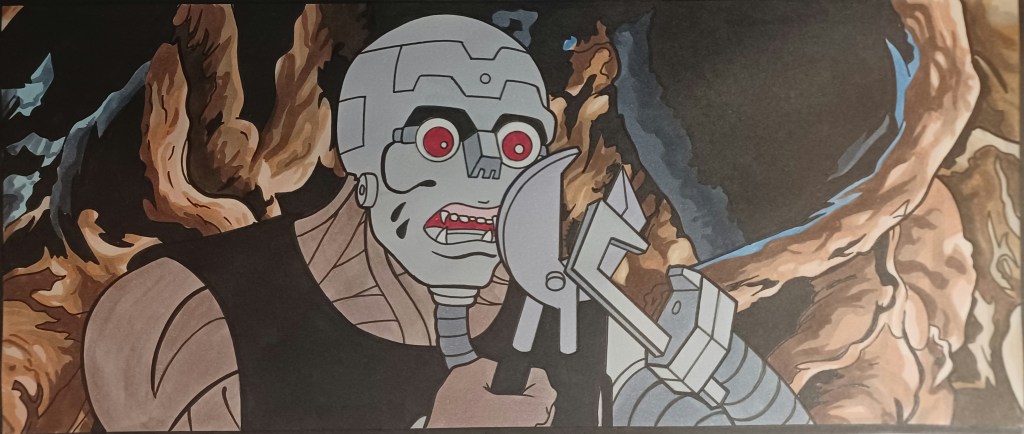
The scene I remember, and hopefully hadn’t made up in a fever dream, was a scene that took place in a swamp. A teenager or young man with amazing feathered hair and headband combo (it was the 80s after all) was running through said swamp with not a Swamp Thing is sight. He is captured by the grotesque cyborg creatures who live there who want to carve up our beloved hero (hopefully, I still didn’t know that bit, remember) for spare parts. These creatures where like the big bad from Moontrap (1987) or Virus (1999), using both mechanical and organic parts from wherever they could find them to keep themselves alive. And when I say grotesque, I mean it. They were like if H.R. Giger’s nightmares and H. P. Lovecraft’s nightmares merged together after going through Brundle Fly’s teleporter and had a baby with Philip K Dick’s paranoia. And then animated. Truly fucked up stuff. Maybe that is why I didn’t remember anything else about the film. My young mind may have just switched of and retreated hoping the nightmares wouldn’t come. Spoilers: it didn’t work.
But the strange hunchback with the giraffe like neck and the chrome skulled leader with the bulging human eyes stayed with me, for better or worse. I’ve drawn versions of these things ever since.
And so, like last time, we have to fast forward a decade and change into the future of 2005 (the same time period the action in Transformers: The Movie from 1986 takes place. Just saying) to when iMDB is a thing and other internet sites and chat room were filled with nerds arguing and analysing stuff they like. So, nothing like today. I was doing a little hunting online for movies and the like, but I wasn’t having any luck. I was looking for a film called Eliminators from 1986. I knew the film had a cyborg character in it, so I typed into the search engine ‘cyborgs in movies’ hoping for a list. This is something I had done before.
The list that I found detailed all the films featuring Androids, robots, man-droids and cyborgs in film. Wait, what was that? I said to myself out loud knowing full well the cockroaches would just ignore me. Man-Droids? My brain made the Scooby Doo sound. Why did that sound familiar to me? ‘Fuck it!’ I though and typed in ‘Man-droids in animated movie’. And there it was. A dark animated sci-fi fantasy film called Starchaser: The Legend of Orin. Directed Steven Hahn, written by Jeffery Scott and Produced by Steven Hahn and Daniel Pin, this film was released in 3D in 1985.
I couldn’t find it to watch online on YouTube (you can now), streaming services weren’t a thing yet (think I said that last time), DVDs while released, seem impossible to find. Even on eBay. I did the only thing I could do, I downloaded it from a torrent site. Still not something I’m happy I did, but living in this country sometimes it is your only option. I waited with baited breath hoping it really was the film I had quested for all this time. Holy shit!!!! It was indeed.
The story is set in the future year of 2985 and the tale opens on a planet named Trinia. Human slaves have been living (and dying) and working underground for millennia mining energy crystals from the rock that are used to power everything from calculators to robots to starships. They mine those crystals for their ‘God’, a being named Zygon (And he looks nothing like the classic Doctor Who villain) and his army of robots. And no one topside of the planet, or in the rest of the universe know that these people are down there. They are all under the assumption that the mining it done by robots.
Amongst these slaves is Orin (the young guy with the amazing hair I mentioned earlier), his girlfriend Elan and Elan’s grandfather, who in this story is just called grandfather. And I thought to myself, he isn’t going to be around long. You might as well put him in a red shirt.
Anyway, while working their shift, Orin finds a jewelled sword embedded in the rock. Orin is like, ‘I found a pretty thing’. But Grandfather recognises the sword (not sure how) and tells Orin it’s an important thing and the robots must never find it. It has to be kept a secret. When Orin holds the sword in both hands, it shakes, glows, flies out of his hands, sticks blade first in the ground and a projection of a Gandalf wannbe with less charisma appears and speaks. He tells our heroes of the outside world, a place they thought to be a myth. And to free his people Orin must journey out into the universe to find the power he needs to do that and destroy the evil that keeps them all there by finding the blade of the sword. The projection disappears and so does the blade of the sword, leaving only the jewelled hilt.
Orin and Elan decide to head out of their forced hell and, for lack of a better term, quest for the blade. They leave behind everyone, including Orin’s blind little brother Calli, and head out. Travelling through the religious temple/alter where they place the crystals after mining them and receive food in return, they emerge of the other side into a futuristic industrial complex where they are confronted by Zygon and his robots. Zygon, revealing himself to be just a man by simply taking of his mask (true Clark Kent vibes here), he says some evil things, and lifting Elan off the ground by the throat with one hand, strangles her to death (wonder where I have seen that before in a sci-fi movie). Orin, after setting off an explosion, escapes. And being trapped due to a cave in, digs his way up to freedom.
He emerges in the swamp I mentioned from my dream and is captured by the Man-Droids. The hilt produces a seemingly invisible blade after one of the Man-Droids accidentally kills one of their companions, allowing Orin to escape. Which he does with the remaining Man-Droids in hot pursuit. Orin, then runs into, quite literally, Dagg Dibrini, a smuggler lying low. Dagg quickly dispatches the remaining Man-Droids and brings Orin (who he has nicknamed ‘Water Snake’) with him as an extra pair of hands on his next heist.
That heist is to steal energy crystals. They, after a few mishaps, are successful, but end up with an unwanted passenger. A government issue robot called a Fembot (yes, you read that correctly) named Silica, thinking all the commotion is a security drill, walks on board Dagg’s ship, the Starchaser, to give them a piece of her mind and gets Bot-napped. Silica is reprogramed and she and the ship’s AI, Arthur, do not get along. They’re on a crash course to wackiness!
They meet some weird and wonderful characters in the city of Toga-Togo on the planet of Bordogon, where Dagg plans to sell his stolen crystals. At a robot slave auction where Silica is almost sold, Orin meets Aviana when they both bid on her. There is trouble, the Starchaser is damaged in an aerial firefight, and they crash. The Starchaser and Arthur are rendered inactive, Dagg is captured, Orin is rescued by Aviana after he is flung free. Silica is left on her own to fix both the ungrateful Arthur and the ship.
Orin tells Aviana, the daughter of the planet’s governor, his story. She uses her computer to do a little research. They find out that the hilt has historically been used as a weapon against evil by the guardians called the Kha-Khan. Their biggest threat, Nexus, was robot planning to rule the beings of the universe with an army of robots. And after that threat was defeated, the hilt was thought lost. They go back to Trinia, run into Zygon who takes the hilt and out heroes are imprisoned. And as plot convenience would have it, they are imprisoned in the same cell block as Dagg.
Aviana and Orin express their feelings for each other in a romance that most porn storylines would think is quick. Aviana is taken onboard Zygon’s ship, again for plot convenience. Then a pesky starfly (who is smarter than it appears) steals the hilt from Zygon and delivers it to Orin. They all escape from the prison. Take control of the ship, us the ship to destroy Zygon’s fleet of starship, and are reunited with Arthur and Silica on the Starchaser.
Orin and Aviana enter Zygon’s base on Trinia, leaving the injured Dagg on the ship with Silica. He re-entered the cavernous hellscape from which he came and tries rallying his people, but is interrupted by Zygon. And, of course, they fight. Orin is almost defeated by Zygon, but before he if flown off the edge of a cliff into the fire below, three starflies appear, merge into one and tell Orin he does not need the hilt, the power was always within him, there never was a blade and other ‘the force with be with you, always’ lines. Orin creates a blade of pure energy from his hands out of nowhere, kills Zygon, and there was much rejoicing.
Orin uses his new found power to blast a way out of the underworld to the world topside, complete with steps and everyone is freed. They are all reunited (again) on the surface, and Orin uses his powers to cure his brother Calli of his blindness. The starflies reveal themselves to be the spirits of the previous members of the Kha-Khan and offer Orin a place with them. But he declines deciding to stay with Aviana, his new friends and family. Roll Credits.
Oh, and if you are a little annoyed at me for not saying, ‘Spoiler Warning’ before any of this, Meh. I mean, you with either watch this film anyway, or it’s not your thing. And if this film was a person, it would already have kids that are old enough to vote, so, you know, settle down.
And if you thought to yourself while reading this that this story sounds a bit like Star Wars. You would be correct. Congratulations, you get a cookie.
There have always been movies made to cash in on a popular film or trend. That is just a given. But with the emergence of the blockbuster, starting with Jaws, they started popping up all over the place. They are called ‘knock offs’. Some good, some cult classic and some bad. With the release of Jaws in 1975 we get the good like Piranha (1981), the cult like Alligator (1980) and Grizzly (1976) and the bad Devil Fish (1984). Alien (1979) gave us Contamination (1980) Deepstar Six (1989) Galaxy of Terror (1981) and the bonkers Lily C.A.T. (1987). Terminator (1984) gave us Cyborg (1989), Nemesis (1992), and Hardware (1990). And of course, Star Wars has had a metric butt-ton of them. Battle Beyond the Stars (1980) is probably the best of them, but Starcrash (1978) Message From Space (1978) and our humble film Starchaser: The Legend of Orin (1985) are among the more recognisable.
While many are shameless rip-offs, not even trying to disguise what they’re doing, some at least try to do something different and are fondly remembered for it, like Battle Beyond the Stars and Galaxy of Terror (thank you Roger Corman). Starchaser: The Legend of Orin, fairly or not, is lumped in with the ‘knock offs’. It seems to flip between ‘we’re doing our own thing’ and ‘yeah, this is Star Wars’
Should it be in the knock off pile? Hell yes. But that doesn’t make it a bad film. It might not be a good film, but it’s definitely on a bad one. It is simply a fun little piece of entertainment that is derivative of something else. Something you could accuse Star Wars itself to be after to realise George Lucas famously cherry-picked elements, designs, transitions and whole chucks of plots from other films and movie serials.
Starchaser is Star Wars with a new suit of clothes. Orin is our Luke Skywalker stand in, Dagg is our Han Solo (but in this case there is no argument about who shot first), Aviana is Princess Leia and Zygon is Darth Vader if he was played by David Bowie. Even Elan and her grandfather are playing on Uncle Owen and Aunt Beru, being that their deaths light a fire under our hero and sever certain ties to his life allowing him to leave. And of course, Zygon’s robot army, while looking more like the Cylons from Battlestar Galactica, serve the same function as the stormtroopers. Hell, even their aim is the same.
The story follows the same beats as well. The ‘chosen one’, a hero from a backwater find out they’re special and goes on an adventure to save the world/universe. There is the wise old man that guides the way, the rogue who helps, the damsel in distress/love interest, the comedy sidekicks (being robots in both cases), and strange, otherworldly creatures and characters that they meet along the way. And the Starchaser itself is our Millennium Falcon for the film. Even if it has more in common with Star Trek’s iconic ship. Like Star Wars, there is an element of the King Arthur legend in here, and even a dash of the Masters of the Universe as well. And with a lot of stories like this, the way forward is the way back, and the power was within you all long. Hell, movie goers saw that in The Wizard of OZ back in 1939.
But the film does do a few things differently. Add little spice of its own to the meal. The R2D2 and C-3PO stand-ins are not the usual comic relief characters in this kind of movie. Arthur, the Starchaser’s AI, while he frets like C-3PO, he comes off more like Dr Smith from TVs Lost in Space without the self-serving undercurrent running through that character. He is also stationary, physically being a part of the ship. Apart from his voice, he is given character by an eye stork that pops up out of the ship’s main console. The other droid, Silica is a different beast altogether. With a design that is more similar to the sexy femme fatale robot from Fritz Lang’s Metropolis (oddly enough one of the designs that influenced C-3PO look), she at first isn’t given much of a personality. Well, at first, at least. She embodies three different character types, or stereotypes, depending on how your bread is buttered. She is first shown as a by the numbers ‘ball busting’ female authority figure, then when she is reprogrammed by Dagg, she becomes the sex pot stereotype, all gooey eyes and sexy walks, who is in love with Dagg, and then when she is being sold in Toga-Togo, she becomes the damsel in distress in need of rescuing. She doesn’t seem to have a personality or a mind that is her own. The is until she IS alone, left to repair the ship and Arthur by herself. Then she becomes a ‘person’, and a member of the crew and has purpose in the story and also moves it along. She saves the day on more than one occasion.
The film isn’t all stolen ideas and stereotypes, mind up. There are some very elements to this animated flick too. The environments are not the usual standard here. The underground mining colony seem more at home in an Indiana Jones and the Temple of Doom knock off, the swamp locale is straight out of a horror movie and the planet Bordogon has more in common with a fantasy sword and sorcery film than a sci-fi or space opera.
The animation itself is unlike the Saturday morning cartoon of the time. There is a fluidity to the movement of the characters similar to the rotoscoped animation of the films of Ralph Bakshi. The main villain Zygon even looks like an alternate version of the villain Nekron from Bakshi’s Fire and Ice, right down to the blue skin. Fun side note: Andrew Belling, who composed the music for Starchaser, also composed the score for Bakshi’s Wizards in 1977.
And with the film being in the ‘knock off’ pile, I do think a lot of people did see this. Maybe not on cinema screens, but on VHS and TV, because I think the film may have influenced are few things in later, more successful properties. There is a part within the aerial dogfight that Starchaser is in in the middle of the film where the Starchaser does a very interesting manoeuvre. By turning its nacelles on the side of the ship, they forcibly turn the ship around in a slip second. A manoeuvre that wouldn’t be seen until a certain Firefly class ship did the same thing in the film Serenity. Upon watching this film again for the purposes of writing this article, I couldn’t help wondering if Joss Whedon was a fan of this movie.
Another is the death of Zygon. After Orin gains his hidden strength and produces the blades of energy from with, he slices Zygon in two at the waist, and the villain falls into the fiery cavern that he was about to throw our hero. And we see split into two as we watch him screaming all the way down. I like to imagine George Lucas saw this film and lifted that scene for the death of Darth Maul in The Phantom Menace. Which is fair play. They kind of owed him. Maybe that’s why he never sued them.
At the end of the day, this film is fun, but doesn’t really stand out from the crowd of sci-fi adventures and imitators that flooded the market in the 1980s. Unless the nightmares that keep you awake when you were a child where that of those fucking Man-Droids. It is enjoyable enough, with a certain naïve charm, but not memorable. Young kids might enjoy it, but I think audiences have long since moved on.
But if you are curious or, like me being a massive nerd, and has a thing for animated films from the 80s and 90s that had nothing to do with big studios, I would, oddly enough, recommend this. Not as amazing as a film by Ralph Bakshi or Don Bluth, and if you never saw the film, you wouldn’t be missing much. Bit I liked it. Flaws and all.
So far, this is the only film I’ve covered that I don’t actually own a copy of. I have to get on that one of these days.
Well, till next time fellow Man-Droids.
-
Chasing Thunder Part 1.
Have you ever read or watched something that has stayed with you, but you can’t remember where from? Images, dialogue, a turn of phrase, or a scene from a movie or TV show but that snippet is all you remember? No name, no other story elements, no larger context at all. But these little snippets get stuck in your head all the same. And you are left wondering if they were real at all.
I do. I have many. And a memory that is unreliable at best, compounds the issue. I think they are like a song that gets stuck in your head and the only way to exorcise the demon is to listen to the whole song. The only way to remove the sabots from your mental machinery.
When I was younger, and just starting to read more and more books from the public library (books I wanted to read), I discovered a book with a cool looking cover. A stone angel and a lion on a black background. I added it to my pile of books and journeyed home. I remember the feeling I had when I read this little hard cover book. Exhilaration, amazement, suspense, pure joy and a sense of triumphs upon reading the ending. It was the first time my arse and the edge of my seat met while reading a book.
The thing is, I can’t remember the name of the book or the name of the author. And over time, more and more of the story has crumbled from my memory. I knew it was a fantasy novel taking place on the moon with an angel and a lion. Seriously. And no matter how many google searches and lost hours looking through second-hand book shops, I still an no closer to finding the book. And it’s been well over 30 years (I think) and I would give anything to read it again.
There are, to no one’s surprise, many movies that take up the same fractured space in my head. And over the years I have tried to track down all the movies that these jigsaw pieces fit into. I would like, if I may, take you on a journey into a few of these films that I have hunted down. One I knew was real and one I was convinced I had imagined as a snort nose little kid with an out-of-control imagination.
For the longest time I had a scene of torture in my head. What? Don’t look at me like that. It’s true. It would occasionally play in my head at times of stress, physical pain, or trauma. So, you know, a lot. And I’m not entirely sure where I saw it. Still don’t. It might have been playing on television and I caught the scene while flicking through channels, or I could have seen it a I wandered into the living room looking for my parents one night because I couldn’t sleep and they where watching a VHS rental after the little punks that had ruined their lives had gone to bed. This one is probably more likely.
Anyway, the scene involves a man being surprised in this home by a gang of thugs, led by a guy who looked like Sheriff Rosco from The Dukes of Hazzard. They wanted something this man had and procced to beat and torture him to git it. There where punches and kicks, they burnt his hands with cigarette lighters, and then they ram his hand into the garbage disposal in the kitchen sink and flip the switch, mutilating his hand with the hidden spinning blades.
What stuck with me was that the music didn’t match the visuals. The character that was being tortured was a Vietnam vet who had been tortured in a prison of war camp for many years (this is something I found out later, by the way). And during the torture at the hands of these thugs, he was flashing back to his time in the POW camp. But when the flashback cut back to the present day, the sound from the flash backs would linger in the present. Connecting the past and present trauma of the character. Until the moment his hand was destroyed in that disposal unit. The flashback sounds completely took over the present-day scene. Even the main character’s screams and the sound of the garbage disposal were gone, just the sounds of the past trauma., The pain and the horror of the act present only in the silent scream on the actor’s face. And fuck me, I was traumatised.
The power of the cinematic image to tell a story struck me like a lightening bolt that day and the horror of that moment burned into my little brain. And my imagination turned it over and over for years. Problem was, nothing else about the film stayed. I must have been pretty young when I witnessed this. Which brings more credence to the walking into the living room while a movie was playing scenario. But I never forgot it.
Fast forward to a decade and a half later. Being an unwavering cinephile (or film geek, whatever works) one of the things I love to do it reading film books and tracking down documentaries on film and filmmaking. So, after I watched Mean Streets and Taxi Driver back-to-back, I wanted to track down some more 1970s American films like them to devour. I found a couple of docos on films form the 70s and watched them while taking notes. Yep, I’m that kind of nerd. And can you guess what happened next?
With the likes of Tarantino and Robert Rodriguez were talking about a notorious scene in a 70s film they love, my ears perked up. Then they showed part of the scene in the doco, and time stood still.
Have you ever heard of the Vertigo Effect or the Dolly Zoom Effect? It is an in-camera effect made famous by Hitchcock’s Vertigo and Spielberg’s Jaws. The effect is achieved by the camera zooming into a character or object in the foreground while the camera itself dollies or moves aways from the character in the foreground. Or Visa Versa. During this effect there is a continuous perspective distortion as the background seems to change shape, seeming to stretch to or from the audience. It is often used to visually compound an emotional or intellectual epiphany or discovery. Check YouTube for examples, it’s seriously pretty cool stuff. This is the only way I can describe that moment when I saw that clip. After so long, I found the damned film. And it WAS real.
The film turned out to be Rolling Thunder, a 1977 revenge thriller directed by John Flynn, who would later go on to direct Best Seller in 1987, Lock-Up in 1989, Out for Justice in 1991, and Brainscan in 1994. It was also co-written by Taxi Driver scribe Paul Schader based on his story. I was so in.
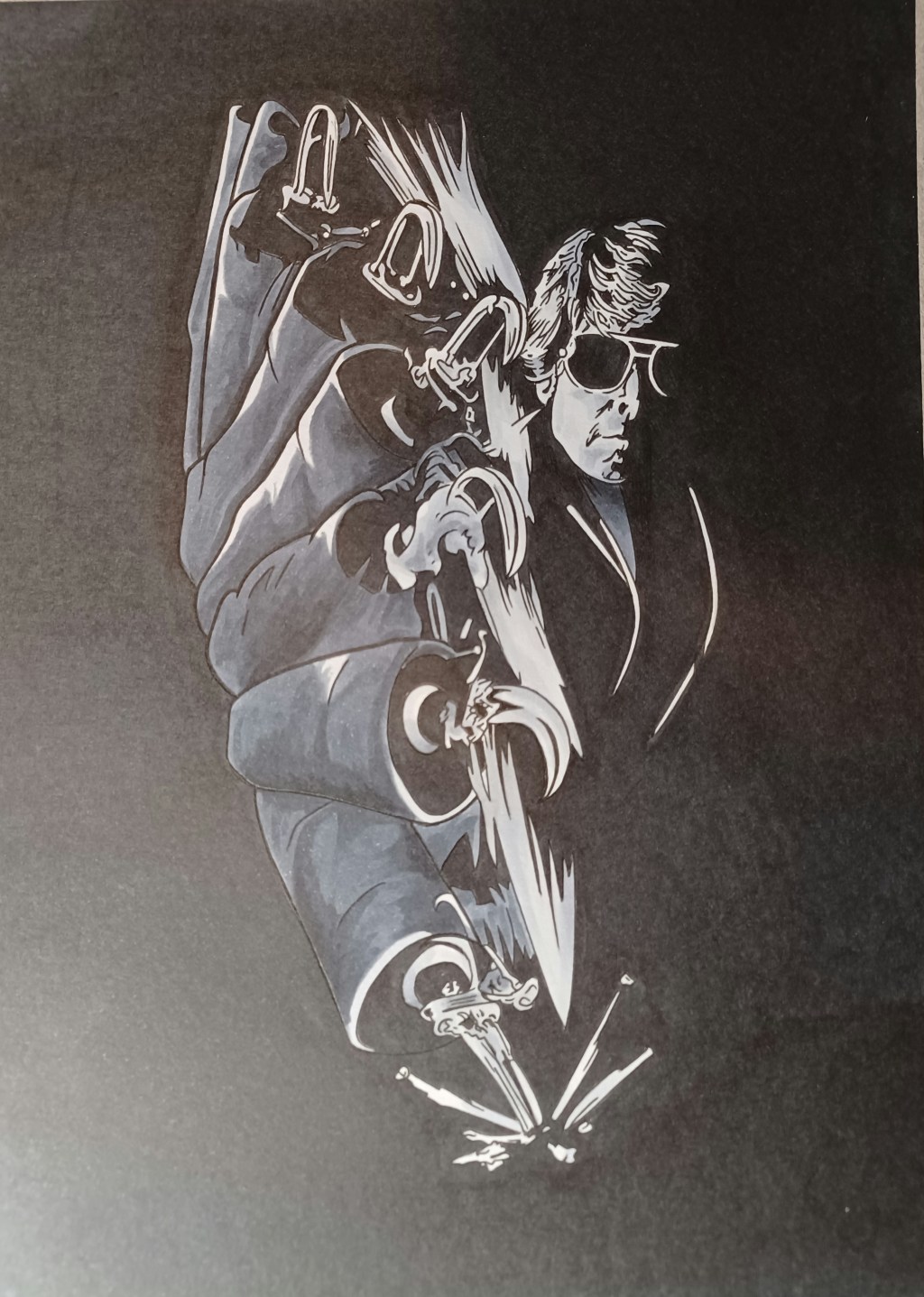
The film opens with our hero Major Charles Rane (William Devane) and his friend Johnny Vohden (Tommy Lee Jones) flying home after being released from a POW camp many years after the end of the Vietnam war. They are greeted as heroes with a big ceremony in Rane’s home town. Rane is even presented with a brand-new car and a massive box full of silver dollars. One for ever day he was away. Rane and Vohden part ways and Rane returns home with his wife and son, whom he has not seen since he was a baby. While his efforts to reconnect with a son who never knew him are successful, his wife on the other hand is a different story. His wife, after Rane was presumed dead, had move on. She informs Rane that she had been engaged to the local sheriff. Rane moves to the tool shed in the back of the house, a place he has converted to a living space. This distances him from his family, but it is a space he feels comfortable in after the trauma he has gone through. He has accepted the new dynamic with a quiet nobility.
Rane distancing himself from his family is a microcosm of the disconnect returning soldiers experienced I think after they came home to an America they didn’t recognise any longer. Rane is now a man out of time. This is a rather sad and melancholic part of the film. He loves his wife and son (like he does his country) but he will always be separated from them. Even though they are still present. This first part of the film is wonderfully shot and the performances are great. Its almost meditative and informs the characters motivations later in the film. Rane is a man of violence who has been changed by violence, living in a world that has moved on from such violence. But Rane is about to be changed by violence again.
After returning home on day, Rane is confronted with a group of thugs waiting for him in his home. A rough and ruthless bunch of bastards led by The Texan played by James Best (turns out it was Sheriff Rosco P Coltrane from Dukes of Hazzard) and this right-hand Automatic Slim played by Luke Askew. They demand the box of silver dollars and say they will torture him to get it. And they do. But Rane says nothing, utters no sound. He has lived with this kind of torture before.
His wife and son return home, they are bullied and threatened. His son tells them where they can find the box of silver dollars and then Rane’s family is gunned down and his hand get the disposal treatment. From here, the film takes on the revenge action thriller aspects it is remembered for. It has many of the same beats you would except as other films in the genre. After getting out of the hospital, Rane now has a hook on his right hand which he later sharpens into a weapon and practises with it so he can reload a gun. And with the help of a waitress he befriends, Linda (Linda Hayes), he sets off to find those responsible.
One aspect of the film that I think is interesting is that Rane isn’t always effective dealing with gathering information and with confrontation when it arises within the narrative. Think how Indiana Jones get his arse handed to him in a lot of fights in his franchise. But darker and more Death Wish-y. At one point he sends Linda into a bar in Mexico to get information and she almost gets raped, Rane having to rescue her. And the antagonists here don’t even know the people Rane and Linda are looking for. He underestimates Automatic Slim and almost gets himself killed. He is too far removed from the violence that had defined him in military service, and it shows. But his single-minded determination pushes him forward. Even abandoning Linda to head off to get his revenge without her. Either because he couldn’t handle here getting hurt or because she is getting in the way.
After tacking them to a brothel in Texas (being led by a man know as the Texan, its not surprising), he enlists the help from his old buddy Vohden who lives in Texas with his family, on one last mission. This is the gore filled climax and it is the film’s major set piece. Our two heroes dress in their military dress uniforms and head to the brothel loaded for bear. They proceed to take out the bad guys in a roaming gunfight through the brothel. And while they are victorious, they are both wounded. But we are left wondering how badly, as the film ends with both men holding each other up and walking out of the brothel surrounded by dead bodies. Que the music and roll the credits. And just so you know, this doesn’t do the finale justice. You just have to see it. It’s worth a look.
The film did leave a lasting impact in 70s cinema and to the action revenge genre, becoming a bit of a B movie triumph. While it wasn’t a massive hit upon release, VHS rentals and cables showing turned it into a cult film. Quentin Tarantino so loves the film that he named his distribution company that specialises in releasing B-movies, cult classics, independent and exploitation cinema and foreign films after this movie. Rolling Thunder Pictures.
Is it a great film? Well, no. Okay, but is it fun? Yes. There are a few story elements and plot holes that don’t go anywhere. Like what happens to Linda after she abandoned. And there is a whole plot thread about the Sheriff (that was engaged to Rane’s wife) hunting down Rane because he knows he is killing people using vigilante justice. That goes nowhere too, ending abruptly . But there is plenty else to keep fans of this kind of film satisfied. The story and acting it top notch, direction is good and the cinematography is solid. While some my find it a little cliched by today standards, just remember many of the clichés weren’t clichés yet. It is a good little flick. While this kind of story has been done better since this film was released, it is very much still worth a watch. Even if its just for William Devane’s career best performance. A great way to spend 96 minutes. And part two, I will tell you about a very different experience and a very different film. Stay tuned.
-
Speak Evil to Me.
In my piece about the movie House, I detailed the way I chose movies to rent from the video store when I was a kid all the way through to my early twenties. Roam the isles until something popped out at me. Evilspeak was not one of those movies. Remembering back, after I’d actually watched the film, it didn’t have a box cover that seemed interesting to me. A black background with a heavily shadowed half face on one or a TV on a black background with a version of that same face on another. To me that looked rather boring back in the day. And the tagline, ‘Remember the little kid you used to pick on? Well, he’s a big boy now.’ Didn’t help matters any. Seemed either lazy or something from a soft-core porn release in a section of the video store I wasn’t allowed to go into before my teens.
And then the film left my memory. Its didn’t re-enter my film obsessed brain until my late thirties after I saw a documentary on the Video Nasties where the film was mentioned as being on that, then, controversial list. That’s when my ears perked up. Where did I know this title from? It took me a few minutes before I remembered that terribly boring box cover. That film? Okay.
Now for those who don’t know the Video Nasties list was a list of video titles released and then banned in the UK by a conservative government, the Video Recordings Act 1984, and certain religious lobby groups for fear that the indecency of these films would destroy children and burn away the fabric of the British people. It didn’t and it hasn’t. Many of these films would go on to be considered modern or cult classics. It shows that people will bitch about anything they personally don’t like and cloth it in moral, religious or social outrage. This movement actually had filmmakers like Sam Raimi put on trial for their art. These crusaders can seriously fuck off.
So, back to Evilspeak. I went looking for this flick everywhere I could. Hey, it stars Clint Howard. Like I’m not going to watch it. I couldn’t find an old VHS copy, couldn’t find a downloadable copy that wouldn’t kill my computer with a virus, DVDs where not available and streaming services still weren’t thing yet. I just thought it was going to be one of those films that I just wouldn’t be able find in this country. Seriously, why is it so hard to get exploitation or cult films in Australia?
I finally saw it last year. Writing this is 2022, that fabled ‘last year’ was 2021. In the middle of lockdown. I came across it by accident on eBay, a DVD release from 88 Films. I was bought and watched in all its restored gory glory.
Then prologue to the story sees a demonic ritual taking place on a beach a couple of hundred years ago preformed by the evil monk Father Esteban (Richard Moll), complete with a human sacrifice from a willing female follower culminating in her beheading.
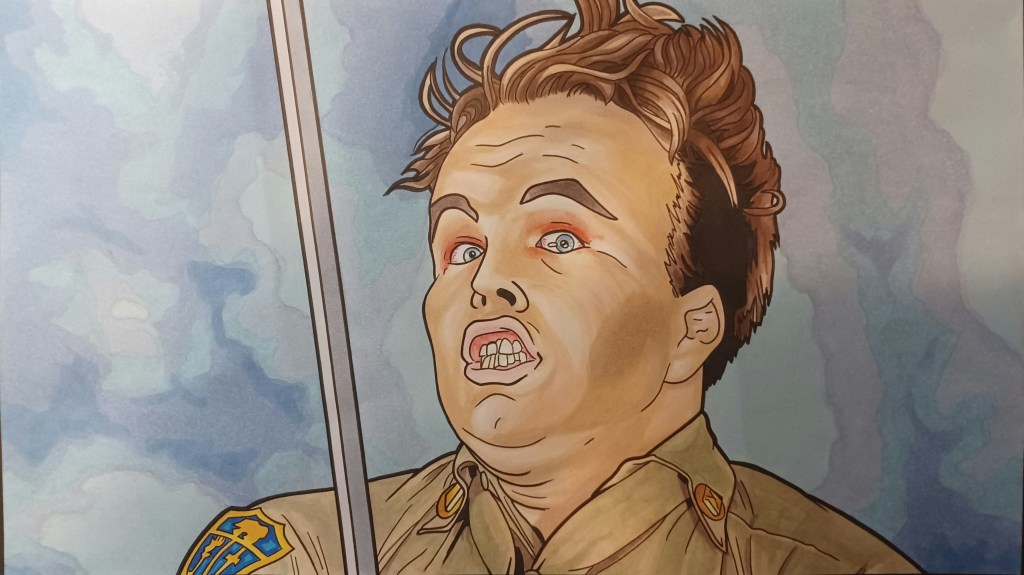
The flying head in intercut with an airborne soccer ball as the film jumps to the present day of 1981. Here we meet our protagonist Stanley Coopersmith (played by the always amazing Clint Howard), a cadet at the West Andover Military Academy. Stanley, while intelligent, is a quiet and shy boy, not at all athletic, socially awkward, and an orphan there on a scholarship. And because of these ‘social failings’, Stanley is mercilessly teased and harassed by his fellow students. Stanley is also seen as inept by his instructors and staff alike at the academy and dismissed out of hand as a lost cause. He doesn’t live up to their standards, being short, quiet and poor, they don’t even bother to teach him anything. His treatment at the hands of the so call institution of higher learning and were ‘boys are mouldered into men’, is like a prolonged torture session.
The only people to show Stanley any kindness are fellow student Kowalski (seemingly the only black student at the Academy) and the cook who befriends Stanley. Apart from these to bright points of light in Stanley’s life, it seems the world has it in for me.
This is, for me at least, the most frustrating element of the story. The lengths the other characters in the film go to, to torture Stanley seems almost comically mean. The venom aimed at this hapless boy boarders on the perverse. I mean, how much can these people hate this kid simply for being different? And he is not overly different to other students in the story. It always seemed heavy handed to me the first time I watched the film. But that has lessened over time. Because this is an exploitation kind of horror movie and the antagonists are caricatures rather than characters. I shorthand designed to initiate an emotional response and make you feel for Stanley. You realistically, you don’t have to go far to see this kind of actions and reactions in the real world. So much hate is directed at the outcast from the status quo. It’s in the news every day. I too, have been on the receiving end of such treatment. So, yes, it is heavy handed. But it is justified within the narrative. It gives some context to what happens to Stanley throughout the film.
After Stanley accepts punishment for something he didn’t do simply to keep the peace, he is assigned to clean the basement of the academy’s main building/church. While cleaning up the basement Stanley finds a hidden room that had been walled off centuries ago. The wall not crumbling behind stacked discarded furniture. The room was Father Esteban’s hidden room full of volumes of Satanic rights and rituals and tomes of forgotten and forbidden lore. Also, the evil monk’s personal diary, which Stanley takes with him being fascinated by it. Stanley would use this room as his sanctuary throughout the film. Something the evil Esteban also did. One of the many narrative pairings of these characters in the story.
The diary is in Latin. So, Stanley uses the computers in the academy’s computer lab, and its amazing software of 1981, to translate the book (an element of Evil Dead here). The computer technology presented in the film is the only thing that seems dated in this film. With most of the characters wearing military uniforms, workers uniforms or basic business cloths, the computers are the one visual element in the film that truly reveals it’s age, where as fashion would usually do the trick. And with kind of story being told and retold, it is kind of timeless. But these old school early 1980s PCs hang like a tacky neckless around its neck. But, even taking that into account, the mixing of the supernatural and the ‘computer age’ is a really interesting gimmick that would be explored in later films.
The translating of the diary’s contents releases an evil force into the school (which use to me a monastery) and Esteban’s spirit, which beings to possess Stanley. He even sets up a computer station in the hidden room, via a massively long electrical extension cord, to continue translating the books and later aiding him in performing rituals. And after more harassment and torture at the hands of the staff and students, culminating in the death of a puppy gifted to Stanley by the kindly old cook at the hands of the head bully Bubba (That 70s Show’s Dan Stark), Stanley finally snaps. His wish fulfilment/revenge fantasy is give power and form as the boy that was Stanley becomes a vessels for Father Esteban’s evil.
Stanley goes from just wanting to be left alone at the Academy, to being a most powerful being of nightmares, albeit through supernatural means. The cruel bullies and the indifferent staff get the comeuppance. In the most violent way imaginable. As consumers of stories, we are conditioned to love the underdog because we see ourselves in them, especially when they come out on top. Stanley does indeed achieve a greatness and a power over those who tortured him, but he losses his soul and his humanity in the process. Even the end text after the climax says as much. Stanley, the only survivor of a brutal tragedy, is not catatonic in an asylum. A place it is implied he will stay until he dies.
For a forgotten film that is over 40 years old, it looks surprisingly good. I’m not just talking about the restoration, but the film itself. The cinematography and set design give a great deal to the story, utilising the locations and sets wonderfully giving a visual sense to Stanley’s journey into hell. And the performances are well executed. You wish the bullies to come to a bad end, especially the main bully Bubba. But it’s the performance of Clint Howard as the put-upon Stanley that is the focus here. And rightly so. He is amazing here. You feel for this character. You believe every emotion emanating from Howard.
While the film takes a while to get going, with almost an hour of set up, the effects once they are shown are well done. But it’s the gory set piece of a climax that gets the most attention in this film. The make-up effects and the SPFX are some of the best you will see in a horror film from this period of the 1980s, and was one of the reasons it was added to the Video Nasties list. And it is so worth the watch, especially if you are a fan of gore effects in horror films. This is worth the price on admission alone.
While not one of my favourites in the genre, it’s well worth a look. As is any film that stars the legend that is Clint Howard. Seriously, why has he never headlined a major studio film?
This story is one for the outcasts, in a genre made for the outcasts.
-
Home is where the Scares Are.
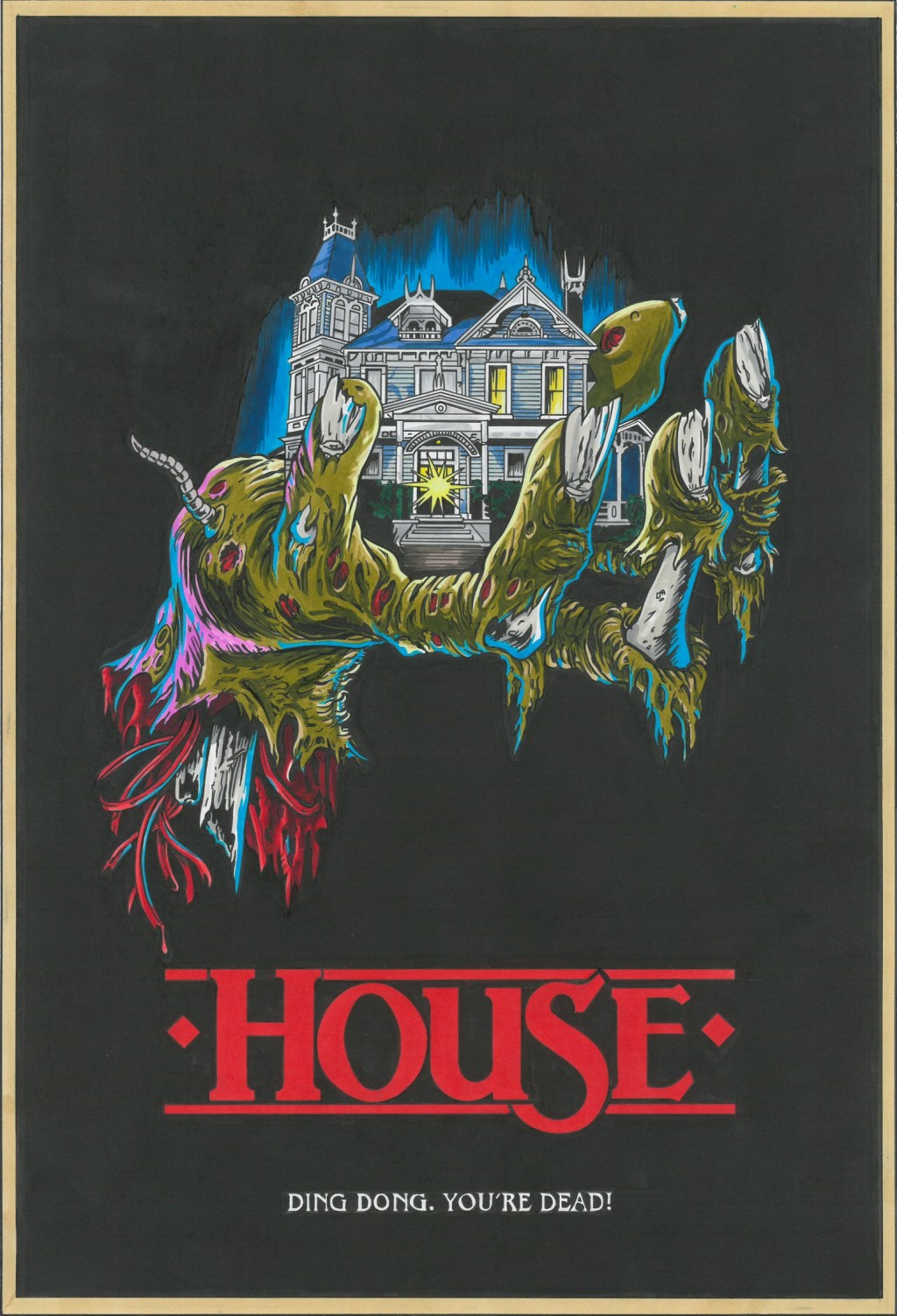
I don’t know how you chose movies to watch when you were growing up, but for me it consisted of walking up and down the isles at the video store (ah yes, remember those) until a box cover caught my eye. Sometimes the focus pulling artwork would steal my attention immediately, sometime I did a double take, and other times they would magically appear next to something I was looking at like a stalker in a slasher film. There where so many ‘Oh My God’ moments hidden in those stores that my head almost exploded on a weekly basis, which does sound like a terrible superpower to have.
But there were always films I was never sure of when I first started choosing movies for myself. One of them was a movie with a very intriguing box cover of a ghoulish, decaying hand floating in the middle of a black ground, forefinger outstretched ready to ring a doorbell on the left of the cover.
It was a haunted house story, and at the time, horror movies with serial killers, masked slashers, and movie monsters of all varieties seemed fun and charged my imagination. But a haunted house or ghost story scared the ever-loving shit out of me. Which was odd looking back, as Ghostbusters was, and still is, one of my favourite films. Still is.
Anyway, this box cover was one I came back to over and over again before I had to the nerve to rent it. And I remember thinking that I was glad that our house didn’t have a door bell because the tag line for this film was, ‘Ding Dong, You’re Dead!’. Yeah, my pre-adolescent brain came up with some weird things.
The film, in case you were wondering, was the 1985 horror comedy, House. I didn’t see the film until my third year if high school, close to a decade after the film was released. And to this day it is among a handful of films that I kicked myself for not watching earlier in my cinematic education.
The film opens with a delivery boy for the local grocery store discovering the elderly home owner has committed suicide after he walks into her feet as she hangs from a noose. We are then introduced to the film’s protagonist Roger Cobb. He is a Vietnam vet with PTSD who is now a horror novelist. The woman from the opening scene was his aunt. Cobb inherits the house and moves in rather than selling it so he has a quiet place to work on his new book. Which is a book about the horrors of what he experienced in Vietnam.
We quickly learn through flashback, that a year previous to this story taking place, Cobb’s son went missing from the back yard of this very house. AS a result of this, his marriage to a famous television actress, and the mother of his child, fell apart. Roger befriends the neighbours and tries to write. But then the ghosts start to appear and the haunting starts. At first Roger believes what he is seeing is all in this head, brought on by writing about past traumas. But the paranormal activity becomes impossible to ignore and we find out that the haunting, the death of his aunt and the disappearance of Cobb’s son was orchestrated by the ghost of Cobb’s old Vietnam war buddy Big Ben, who blames Cobb for his death. Roger fights, wins and there is a nice reunion style happy ending.
The filmmakers, which included some established talent and newcomers at the time that would go on to bigger and better things, but here they did something I thought was rather ballsy. They intentionally put comedy into a horror film. What! That’s no big deal today, I now. But the horror movie parodies in the 70s and 80s were not funny. You might get a chuckle, but that was about it. And many other horror films that were seen as funny, achieved this unintentionally. The ‘so bad its good’ genre. But with House, the filmmakers didn’t lean on the horror to tell the story, and didn’t push the comedy to keep you watching. They seem to have gone to great lengths to blend the two elements together.
I have read reviews and seen online video reviews that say that with this film not being a comedy with horror elements or a horror film with comedy elements, that the film doesn’t know what it wants to be. That because of what they refer to as a disjointed film, that the film doesn’t work on any level. That because it doesn’t go one way or the other that the film is somehow ‘less than’. Which I think is doing the film a massive disservice. We have all seen comedy films that are just not funny, and some are painful to watch, which I would say are a horror to try and sit through. And remember, a horror film doesn’t have to be scary to be a horror film. It’s the elements within the genre storytelling that make it a horror film. With or without the gore effects and jump scares.
The situations characters in horror films find themselves in, especially anything of a fantastical nature narratively speaking, are rather absurd. No matter how ridiculous the setups and situations are, most films are played straight. But why not lean into the Looney Tunes nature of these situations without going full cartoon. House does it and I believe does it well. Saying this is all well and good, but the film wouldn’t work without a cast that is in on the joke. The actors ground the film with their performances. Especially that of William Katt who is in almost every scene and utilises his comic skills and dramatic talents to equal effect in telling this story.
Katt’s character of Cobb is a man that has been beaten down by life, even if the world sees him as successful writer. He is suffering from PTSD from not only his time spent in Vietnam, but also with the loss of his son and the breakup of this marriage a year prior to this story taking place. He has gone through some shit, and when the hauntings start up around him, he reacts like this is just part of his trauma and that these things he is seeing are not really there. But when the crazy funhouse elements announce themselves (made believable on screen by effective special effects and creature design. Seriously, Google the film and check out the images) that become something he can’t ignore or explain, that the ride starts to get interesting. Katt’s reactions to some of the events taking place, his facial expressions, are worth the price of admission.
Katt’s career started with films like Carrie and Big Wednesday, but became well know for this role as Ralph Hinkley, the average school teacher that was gifted a suit that gives the wearer super human powers by aliens, which he lost the instruction manual for, in the sitcom The Greatest American Hero. But he is not the only actor in this film with comedy experience. George Wendt, who plays the neighbour and friend Harold, played Norm of Cheers for 11 seasons. Also in the sitcom gene pool is actor Richard Moll, who played mostly villains in his early career due to his height and amazing face, (and here plays the bad guy Big Ben), played the character of the loveable court bailiff ‘Bull’ Shannon in 8 of the 9 seasons in the underrated Night Court. All three of these sitcoms where staples of the 1980s, and all three of them filmed this story in the break between seasons of their respective shows.
The director Steve Miner used his love of horror movies and his experience in the genre having directed the first two Friday the 13th sequels to do something different with the genre and to show the higher ups at the studios that he could do other types of storytelling. And I think he did just that. He later went on to direct the cult favourite Warlock in 1989, Forever Young with Mel Gibson and Jamie Lee Curtis in 1992, My Father the Hero in 1993, Halloween H2O in 1998 and one of my personal favourites Lake Placid in 1999. And working on House he was working with friend, the director of the first Friday the 13th, producer auteur and horror legend Sean S Cunningham. Both of these men have great senses of humour, just watch an interview with them or listen to an audio commentary of one of their films.
If you have gotten this far reading this, to can tell two things about me. There is really no structure to these cinematic ramblings as my mind just seems to vomit what it know without rhyme or reason, and that I love this movie. There is a charm and a mischievous wink to this movie that tickles me in the right way. Which is a shame in some ways, mainly because the film has largely been forgotten. Well, except for the hardcore horror fans. Their love of this film, and the House franchise, have helped it earn it cult statis.
And because this film doesn’t go the gore route, has no nudity and is light on the profanity (rarely a ‘Shit’ and ‘Fuck’ in site), this film is perfect for someone who wants to get into horror and doesn’t know where to start. You could, in my opinion, sit a 10-year-old in front of this film and they would enjoy it. In many ways, you could say this is the perfect gateway drug to the happy pharmaceutical cinematic excellence of the horror film. The sequel, House II: The Secord Story, is a film that goes the full comedy route, so I think that one is safe for the casual viewer too. But watch out for House III: The Horror Show. That swings for the fences in the opposite direction and is rather disturbing. Watch after you have a few more under your belt first. Trust me on this.
-
Kiss Me Fat Boy!
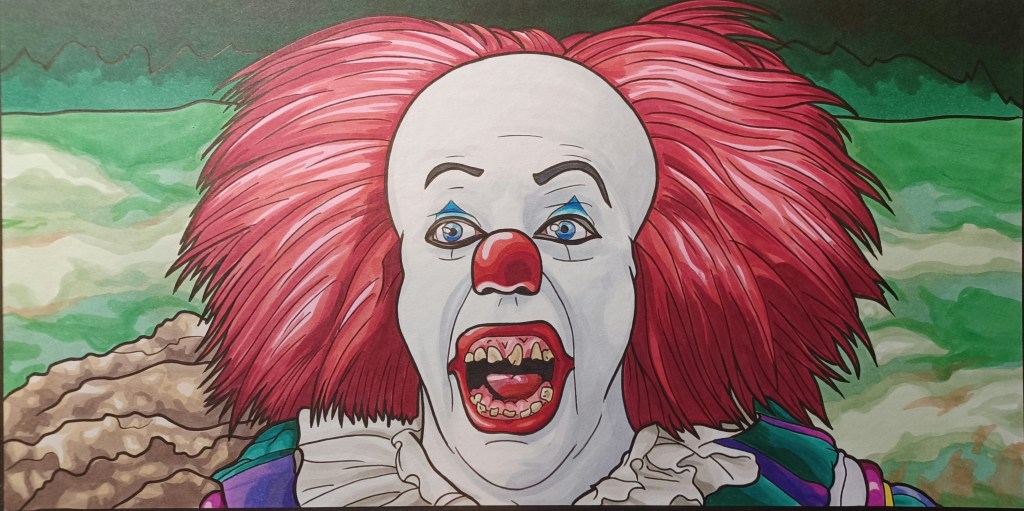
In Defence of the original IT mini-series.
It is no secret to those who know the odd creature that is me, that I am obsessed with film. Movies of all varieties and genres grace the screen via my DVD/Blu-Ray player or streaming services that I abuse. It is a way of life for me, film has always sparked my imagination, taught me valuable lessons and in a way, furthered my education in areas I found interesting. And it all started when I was a child, as most things do.
I not only watched everything I could, marvelling at the way filmmakers and actors told these stories, but I read about film and television at every opportunity. Which before the internet and easy access to information, was not easy an feet. I spent almost as much money on film magazines as I did on going to the cinema or renting videos. In the pages of these publications, I first became aware of the concept of competitions.
I was like, ‘Holy shit! You can win these things. And then they’re yours.’ I was so in. The way competitions work hasn’t really changed, except how you enter. Back then it was stamp and envelope. And I used an office supply store’s worth of stationary supplies to enter everything I could.
And then, one strange but ordinary day, I got a package in the mail. I had won a VHS copy of what would not only be my introduction to Stephen King, its was the first movie I owned personally and started me on a road on movie collecting and a love of horror films. That VHS was, as you may have guessed, was a brand-new rental edition of the 1990 mini-series Stephen King’s IT.
I had no idea what the story was about from the title, when I slide that VHS into the VCR, apart for the cover art that had me enthralled (evil looking clown = awesome), but what a ride is was for the twelve year old that I was, and some would argue, still am. And I watched it. And watched the next day, and the next. I found it thrilling, both excited and scared shitless. And with every viewing, I saw something new, thought of new things, how certain characters felt and puzzled over their reactions and their place in the story.
Stephen King’s It was originally a two-part horror mini-series that aired on the American ABC network in 1990 and was directed by Tommy Lee Wallace (director of the underrated films Halloween III: Season of the Witch and Fright Night 2) and adapted for the small screen by screenwriter Lawrence D. Cohen, who had earlier in his career adapted Carrie for Brian De Palma. When I watched it for the first time a little over a year later, the mini-series episode were edited together into a two and a half hour movie, so there was a lot missing when I first watched it. It wasn’t until it was released on DVD did the full version become available in Australia. You know, the place where I live.
The basic synopsis of the story (and by ‘basic’, I mean basic) is, a group if kids in the end of the 1950s become aware and then are stalked by an evil supernatural entity that uses the visage of a clown named Pennywise, to terrify its victims before killing them because fear tastes better. The kids band together and defeat the clown. They make a promise to return if the clown ever does return. And return he does. The one member of the group of kids that stayed in the small Maine town, calls all the other members of The Losers Club, and they all return to do battle with Pennywise, this time as adults in their 40s.
The event mini-series was a big thing in the 1970s and the 1980s, but between 1979s Salem’s Lot directed by Tobe Hopper and 1990s IT, there where none based in Stephen King’s novels, despite King being a hot property when it came to adaptions of his work. And that doesn’t seem to be changing. But before the mini-series was made it was first envisioned as a feature film and then as a 10-hour, 4-part mini-series to be helmed by King collaborator and horror legend George A Romero. This is something that King and Mike Garris got to do with The Stand mini-series in 1994 for the ABC Network, and I would have loved to have seen what IT that would have been with this kind of treatment. But it was trimmed down to two, 1 and a half hour episodes (2 hours when broadcast due to advertisements). Mainly due to the controversy steaming from elements in King original novel, budget issues and the constraints of network television at the time. So, Romero, The King of the Zombies, left the project and went on to direct another King property in 1990, The Dark Half. Instead and directing duties went to Tommy Lee Wallace, a frequent collaborator of John Carpenter’s.
And an odd little piece of trivia I found is, both parts of the mini-series together is only 15 minutes short than It: Chapter Two (2019). How far we’ve come.
But why is this film/mini-series important, you ask? Hold your horses, I’m getting to that. The mini-series was very melodramatic, almost like a soap opera or a thriller ‘movie-of-the-week’ kind of thing. But what elevates the mini-series to a higher standard is the cast. The adult versions of the characters were played by veteran TV and film actors who new their craft with the likes of Richard Thomas, Tim Reid, Annette O’Toole, Harry Anderson, Dennis Christopher, John Ritter, and Richard Masur. Even Olivia Hussey (Franco Zeffirelli’s Romeo and Juliet, Black Christmas, Death on the Nile, And the Ozploitation classic Turkey Shoot) backs up the main adult cast. They take the material they are given, which is not the best (because of reasons already mentioned), and elevate it to something greater than the sum of its parts. Even if they have to do a lot of dodgy reactions to flashbacks, they weren’t apart of. But it’s the younger versions of the characters that steal the show from their aging counterparts. The younger cast are amazing, I believe that is selling them short. Lead by Jonathon Brandis as the young Bill, and young Seth Green as Richie (who pretty much looks the same today) and Emily Perkins as the young Beverly who when on to star in Ginger Snaps trilogy. Directed Tommy Lee Wallace prefers the first part of the mini-series that features the younger cast because, in his words, ‘the adults weren’t as magnetic to watch as the children, especially when it came to the climatic battles with Pennywise’. Oddly enough, this is very similar to the criticism that the recent two films, IT (2017) and IT: Chapter Two (2019) received, with many preferring the performances of the younger actors to their adult counterparts in the follow up. It’s something about the honesty of the performances from the young actors, especially in a horror story like this, that comes off as more believable. We want to care about them, and so we follow them wherever they take us.
The heroes of a horror movie or series may not be what your interested in. Maybe it’s the monster, the bogeyman or the killer you’re watching these tales for. Because a hero is only as strong as the villain, after all. And boy, do we have a doozey here. Pennywise the clown is above all else what people remember about this mini-series, played with chilling perfection by Rocky Horror Picture Show alum, the iconic Tim Curry. But it would surprise you to find out, that Curry was no one’s first choice to play this role. Filmmakers and the studio went after Malcolm McDowell at one point, then Roddy McDowell (I think they may have been stuck in one section of the phone book for a while) and even shock rocker Alice Copper was in the running. But then there came Tim Curry. And as a kid, he scarred the shit out of me. Which is funny, considering Curry himself is scarred to death of clowns and wouldn’t look in the mirror when his make-up was applied each day prior to shooting.
Curry seems to have enjoyed playing this part. I mean, who wouldn’t have fun playing a mischievous killer clown? If you mix in equal portions of a children’s television host from the 1950s, serial killer John Wayne Gacy and Freddy Kruger and blend until smooth and pour over ice, then you have the cocktail that is Pennywise the Dancing Clown as played by Tim Curry. This movie monster had a personality all his own, and with a mischievous wink, enjoyed his work. Something I believe can’t be said of Bill Skarsgard’s portrayal in the later filmed version. While Bill is a very talented actor, and apart from some natural facial tics he put into his performance, it isn’t as memorial as the visual look of the character. Without Curry in this role, which was billed as ‘Special Appearance by’ in the credits, the mini-series would have been forgotten over time. No saying that the mini-series deserved to, by any stretch. It would have just been another network event mini-series, there to boost rating but ultimately disposable. But it is still remembered fondly by fans old and new to this day, and many believe, as do I, that it is because of Curry.
His portrayal of this evil entity Pennywise became a horror movie Icon despite he only ever appearing once and on TV, no less. Curry’s Pennywise is in the pantheon of modern horror movies icons alongside Michael Myers, The Tall Man, Jason Vorhees, Leatherface, Chucky and aforementioned Freddy Kruger. And while the make-up and costume added to the visage, Curry turned deposable entertainment into a legacy and a fan favourite that stayed in the hearts and minds of people who like a scary story. And the fact that they remade the story into two wildly, worldwide successful films I believe, in part, can be attributed of Curry and well as the immense popularity of his original creator Stephen King.
This mini-series is pretty easy to find. It pops up on streaming services, and you can easily buy a DVD or Blu-ray copy of the film in its complete form wherever you buy physical media. It’s out there, and you should give it a go. The film, I like to think if it as a film, is a very watchable slice of the late 80s -early 90s but Curry’s Pennywise has left a mark on horror film and television that is hard to be denied, even if you dislike the rest of the film. Horror fans owe it to themselves to watch this, because Pennywise is:
“Every nightmare you’ve ever had. I’m you’re worst dreams come true. I’m everything you ever were afraid of.”
Thanks for the Nightmares, Mr. Curry.
-
Going Down to Median.
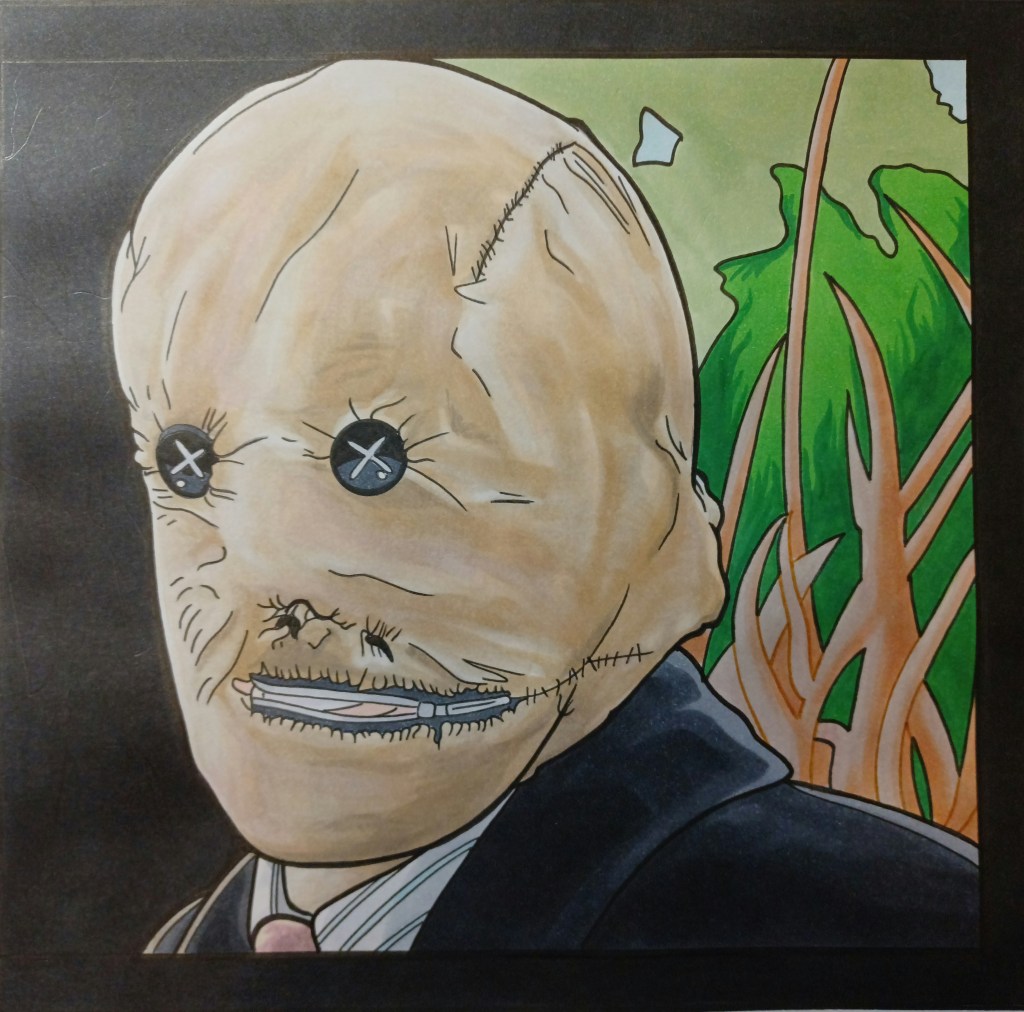
When I was a kid, I loved comics. Hell, I still do. For me is started reading comics strips; Garfield, Peanuts, and the like. I soon discovered Asterix and Tin Tin comics and then the amazing titles offered by Marvel and DC Comics down at the local newsagents. And my imagination exploded. Seriously, the walls needed to be clean.
There was something magical to me about the mixing of words and artwork to create a unique form of storytelling that set my young brain on fire. It was something that, even then, I knew couldn’t easily be replicated in animation or film. And while many filmmakers and studios get so very close, they still can’t quite get to that sweet spot. Even today with superhero blockbusters all but common place.
By the time I was twelve, my favourite titles where the X-Men titles published by Marvel. I devoured all of them I could, the energy filling up behind my eyes like the battery icon on your mobile phone. The Uncanny X-Men, X-Men, X-Factor, X-Force. They were my first addiction, unlike my first obsession in film. And while film was my happy place. Comic books and the world inhabited within their pages where the welcome treat for my troubled young mind.
The mutants in the Marvel universe are a stand in, in so many ways, for every discriminated minority, whether it be on account of race, religion, sex or sexual orientation, or gender identity. The characters and stories in the X-Men titles spoke to you and gave to hope that you would one day belong. Especially if Professor X and his students had your back. And for a teenager who felt he was different to everyone around him, these books were the reality I wanted to exist within.
Shunned by a society that doesn’t understand them and/or are afraid of them, they vow to protect the world from other mutants who would do harm. There was lots of grey areas and a lot of the times it was just a difference in ideologies that set people and groups at odds. They were examples of what kind of person I wanted to be. These characters taught me to look at things from a different point of view, to stand up for what you believe in and to care for others.
I never thought another story could ever do what this ongoing serial could do. That was until I stumbled on a VHS tape at my local video store with a cover that transfixed my teenage stare like an animal caught in headlights. The cover featured a group of characters in a pose that seemed to be part teen movie and part family drama setup. There was a rebel like character in the centre and he was surrounded by creatures, freaks and monsters. The title underneath said, Clive Barker’s Nightbreed. It was the same feeling in my chest as my first crush. I had to watch this.
The main character of the story is Aaron Boone, blue collar guy living and working as a mechanic in Canada with his girlfriend Lori. Boone has been dealing with a mental disorder, the specifics of which we are no privy too. But he dreams of monsters and freaks running from something and calling to him. They both frighten and fascinate him. He has been seeing a psychiatrist, Dr. Decker, to work through these dreams and the mental disorder. When we see him at the beginning of the story, he has been working with Decker for some time. Then one night he gets a phone call from Decker saying that he needs to see him.
Decker convinces Boone that the dreams that he told Decker under hypnosis are in actual fact a series of gruesome murders of whole families. He gives Boone medication to take the edge off his anxiety and tells him that after a 24 hours period he has to inform the police. The medication is not what it says on the bottle and Boone is off on a bad trip. And after seeing Lori preform at a nightclub, takes more of the drugs and is picked up walking in traffic and taken to the hospital.
Sleeping it off in a hospital bed, he is awoken by someone talking to his own reflection, and meets Narcisse, a drugged-out actor raving about a place called Midian. The same place Boone remembers from his dreams. Narcisse tells Boone about Midian, how to get there, and then literally tears most of his face off to show his ‘true self’ to Boone. The medical staff rush in as Boone leaves and runs into the police and Decker. He flees to Midian.
Midian turns out to be a huge graveyard, encircled by 15-to-20-foot stone walls, and guarded by a massive iron gate. Inside he meets two of the Nightbreed, the moonfaced Kinski and the bestial Peloquin. He is attacked, learns the truth that he didn’t kill anyone and is bitten by Peloquin, marking him. He flees again only to come out of Midian, face to face with Decker again and a whole squad of police. Decker betrays him and Boone is gunned down. Dead.
But Boone’s body goes missing from the morgue. He has been resurrected and returned to Midian, where, with the help of the recently resurrected Narcisse, becomes one of the tribes of the moon. He becomes one of the Nightbreed, led by Lylesberg, the keeper of the law.
Lori sets out to find Boone, or at least his body and who took it. She is followed by Decker who has an obsession with Midian and what lies beneath the graveyard. Boone breaks the law to save her, forces an audience with Baphomet, the maker of Midian, and Lylesberg lays down the law and banishes Boone to the natural world with Lori.
Decker kills a whole hotel’s worth of people and frames Boone. Decker, a racist police captain, Captain Eigerman, the whole backwoods gun toting police force and other gun happy locals head to Midian to kill the freaks. Boone and Lori return to help save the Breed and stop Decker and Eigerman. All hell breaks loose. Boone is the mythical hero of this story, to prophesied Cabal, destined to save the tribes of the moon from persecution and death at the hand of human beings.
This is a gross simplification of the story. To give a full rundown of the story would take to long. I suggest you watch the film or read the book Cabal on which it is based on. But I think you get the general idea of the film. This is a story for everyone who has ever felt like ‘the other’ or has ever had sympathy for the monsters in popular fiction.
The film is an allegory for the disenfranchised. For anyone or group of people that is, or has been seen, as outside the ‘normal’ status quo, very much like Marvel’s X-Men before it. But delivers its story through the lens of the horror genre. It is a rich and beautiful story, with great characters in Boone, Lori and the Nightbreed, and even the villains of the piece. The naturals as the Breed calls them, humans, being the true monsters of the story willing to destroy all that is different and that it doesn’t understand. And who better to deliver the story than Clive Barker. Novelist, filmmaker, Producer, playwright, actor, painter and artist.
Now Clive Barker didn’t start out as a director. He took up the task after film adaptations of his stories were made to less than stellar reviews and book office. Anyone remember Rawhead Rex? And Barker himself hated them. So much like Thanos, if you want something done, do it yourself. And he did, with 1987’s Hellraiser, based on his novella The Hellbound Heart. The independently produced horror classic gave us the Cenobites and their priest leader Pinhead and launched a franchise that is still going today.
His second go round as director was Nightbreed. Filmed in England’s Pinewood Studios, with an amazing cast which included Graig Sheffer (Boone), Ann Bobby (Lori), cult director David Cronenberg (Decker), Charles Haid (Eigerman), Hugh Quarshie (Detective Joyce), Hugh Ross (Narcisse), Malcom Smith (Ashberry), Oliver Parker (Peloquin), Nicholas Vince (Kinski), Simon Bamford (Ohnaka) and the great Doug Bradley (Lylesberg).
It also marks the first time there was major interference by a studio in a Clive Barker directed movie. In this case Morgan Creek, who didn’t understand the material. It was reedited, new scenes added, major story elements removed and repackaged as a slasher film. Something it was never intended to be. And while the theatrical release of the film was the one that I fell in love with all those years ago like many others did, the film was incomplete. And watching the theatrical cut, it does feel like it. A fact that I began to see the more I watched it. Between the film and the original novel Cabal, I knew what the was and should be, but the film was still one of my favourites.
When rumours about there being other cuts of the film out there, my interest was piqued. My obsession to see them grew and twisted in my little hellbound heart. I needed this in my life. But the Cabal cut of Nightbreed was a reedit using old VHS film transfers of the deleted material. And was poorly created even though the people who put it together had great love of the source material and Clive’s original vision. But not all was lost.
A few years ago (don’t ask me the exact details here, I can’t remember) the lost footage, the negatives, where found. Praise be to Baphomet. And filmmakers, along with Clive Barker reconstructed the film with all the lost footage and removed what the studio added. We know more about the backstory of our heroes and their relationships to each other, there is more Nightbreed, Decker somehow is creepier, Narcisse’s fate and the original ending from the novel are now restored. I loved it so much, I had to watch it a second time in the same sitting.
The edition of the film I found was the Arrow Video Blu-ray release, which has both versions of the film and an extra disc full of Special Features, complete with new awesome cover art which would not have been out of place in the video store shelves in 1990.
Like I said at the beginning, this film is very close to my heart. And while we never got the sequels I yearned for, I now have two versions of this film (along with the book Cabal) that both have become cult classics that this ostracised horror geek is so very, very thankful for. And something I have rewatched and reread more times than anything with X-Men in the title, in case you were curious.
-
Luna Racing.
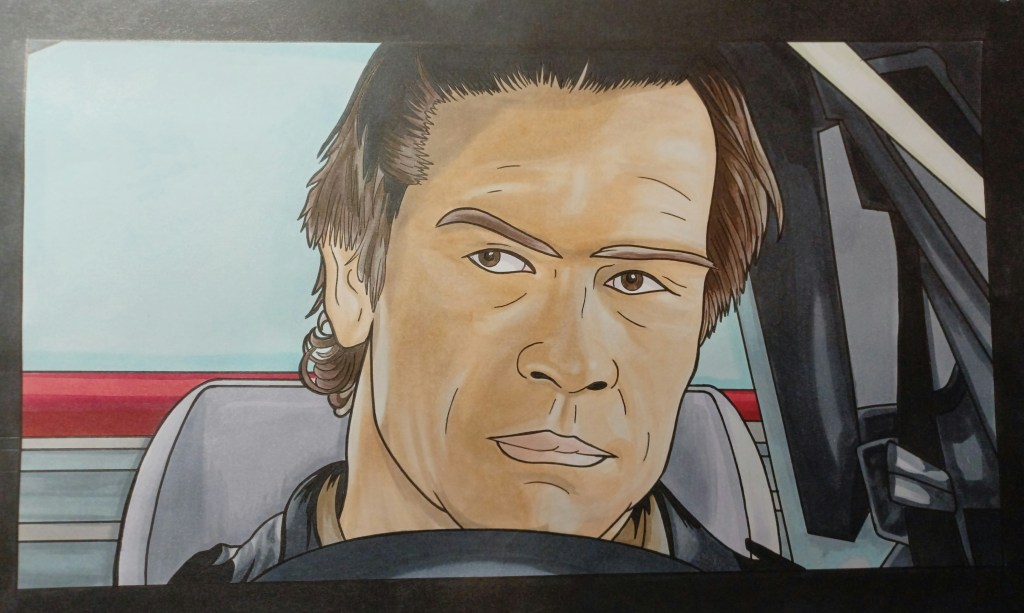
I can’t say I’m a life long John Carpenter fan, because that implies, I was born with knowledge and appreciation of Carpenter’s work. Which in 1978 when I was hatched I did not. And what a blooding weird thing to claim. So, I will say I’m a massive John Carpenter fan. Some say ‘uncurable fanboy’, but those fuckers have no taste.
Where was I? oh, yeah. John Carpenter. I love his man’s output. A true artist of modern times. His movies have a timeless quality too them even looking past some 70s wardrobe choices and his film scores are simple, atmospheric and perfect. Some of my all-time favourites are Carpenter films, like Halloween, Escape From New York, The Thing, Christine, Starman, They Live and In The Mouth of Madness. But my all-time fav JC flick, the one I know all the dialogue by heart and featuring my favourite actor, Kurt Russell, just so happens to be the first of his films I ever saw. That film is the big budget, genre mashup, cult classic, Big Trouble in Little China.
To my ten-year-old mind, it was the best thing ever in the wide world of everything, and that hasn’t changed in the extra thirty plus years I’ve been alive since watching it. BTILC is this amazing mash up of martial arts film, John Wayne western, Chinese style fantasy epic, with big doses of action and comedy. And to top it all off, our main character in truck driver Jack Burton, doesn’t realise he is actually the traditional sidekick character. Monsters, magic, and martial arts in San Francisco’s Chinatown. I mean what’s not to love here. I was mesmerised from the first scene in the lawyer’s office, but when that Carpenter score starts with the titles and the movie proper starts, I became a John Carpenter fan in that moment.
Now the first time I saw the film, it was taped off television, so it was not only a censored cut of the film, it was also cut for time to fit into a certain timeslot. I didn’t see the complete film until years later when someone, I never found out who, recorded over the masterpiece and I rented it from the video store to get my fix. But watching this film was the first time I can remember that I started to look for a director’s name on the video store shelves instead of the actors. And look I did. And watch I did. And oh, the dreams I had.
I also looked for his name in TV guides, magazines, journals, newspapers, and movie trailers looking for movies I had missed, movies that were coming out and anything on the man himself. Hell, I even bought movie novelisation of anything I could find of his work. I still have a copy of the novelisation of Starman. And being a kid in Australia in the late 80s and through the 90s, there wasn’t that much to find. But then a wonderful thing happened. Something that would allow me to find everything I ever wanted to know and John Carpenter and film in general. That marvellous certation was the internet. DUM DUM DAH!
It wasn’t until iMDB that I found a list of all of his work and realised I could actually finish my Carpenter viewing experience. What I found, apart from all the films I owned and watched religiously at least every year without fail, was the TV movies, films he wrote, produced (or both), but didn’t direct and all of his appearances in genre film documentaries and documentaries about him. This was a little extra film geek homework before I could hand in my ‘fanboy’ assignment. Films like the thriller Someone’s Watching Me starring Laureen Hutton and Adrienne Barbeau (which is still an amazing way to spend 90 minutes even for a TV movie), and the three-hour TV biopic Elvis starring Kurt Russell, where both amazing pieces of entertainment, even taking into account that they were made in the 1970s for network television.
I even hunted down others over time as they became available to the film geek half a world away where licencing and rights issues sometimes stopped a film from being rereleased. Like the films based on original scripts that Carpenter wrote on spec as a way of trying to get a foot in the door on the film industry. And one such film is the 1986 action film Black Moon Rising.
Upon watching the film recently, I realised I had actually seen it before back in the 1990s, again on VHS. Ah, the old days. It was in my final year of high school when I was studying for the HSC exams. I was stressed, confused and completely unsure of myself. And to make things worse, there where a number of suicide attempts at my school because of the environment surrounding the final exams. I needed a break, so I rode my bike down to the local home entertainment emporium and rented some distractions, and grabbed microwave popcorn and a massive bottle of Coke for good measure. And this was the first film in a solo movie marathon. It did the trick. It is always amazing to me how a film can take me back in time.
Anyway, Black Moon Rising is a action film that blends the tropes of film noir, an adventure heist caper, and throws in a sci-fi McGuffin of a futuristic car that runs on hydrogen taken from water that can reach speeds of 300 miles an hour.
Our hero is Quint (played by Tommy Lee Jones) a thief hired to steel tax records of a shady organisation by the government. His exit from the organisation’s building goes a bit sideways and he makes his getaway under fire from hired goons lead by old rival Ringer (Lee Ving), who gives chase. Quint ends up hiding the disks with the tax records in the back of an experimental car being transported cross country by the car’s creator Earl Windom, formerly of NASA (Richard Jaeckel), driver Billy Lyons (Dan Shor) and mechanic Tyke (William Sanderson) to make a deal with a car manufacturing company in LA. And since Quint knows where they are headed, makes his own way there, avoiding Ringer and his goons.
Later at the restaurant where the meeting takes place, Quint tries unsuccessfully to get the disks back, and goes into the upscale eatery to watch the car’s creators and his friends and keep an eye on the car parked outside on a trailer in the parking lot. But then Nina (Linda Hamilton) enters the story. She is a car thief working for business man and leader of a ring of car thieves Ryland (Hollywood veteran Robert Vaughan). And surprise, surprise, she and her crew steal all the cars from the parking lot including the super car Black Moon.
Quint follows the best he can to a seemingly dead end in the park garage of a high-rise building, which just so happens to be the secret hideout of the bad guys. Quint then teams up with the car creators to steal the car back, and get his disk back while trying to appease the fed in charge of his hiring Johnson (Bubba Smith, Police Academy’s Hightower himself), and avoiding Ringer and his men as well as Ryland’s henchman Luis (Nick Cassavetes). Quint and Nina develop a relationship and ends up helping the boys get the car, mostly for her own reasons. And they are helped on the way by Quint’s old friend and mentor Iron John (the great Keenan Wynn, in one of his last performances).
Okay, that synopsis is all well and good, but is the movie worth watching? Well, yeah. I know shock horror, right. If you are a fan of action thrillers, it’s a competent enough film. But if you love 1980s flicks of the cult variety, then there is a lot to love here. It might not win any awards but it is a fun ride. With a cool car and everythying.
While this finished film can’t really be called a John Carpenter film, even with an executive producer credit. He basically had nothing to do with the film apart from writing the original script. That script rewritten before production started, like many spec scripts in Hollywood usually are. But I think there is enough of JC in the finished project to warrant me talking about it. And there are some good filmmakers attached to this.
Directed by Harley Cokeliss, a Chicago raised and English film school educated filmmaker has done a bit of everything. He worked for the BBC making children’s programs and films, was the second unit director on Empire Strikes Back (my eyebrow went up on that one too). And he was the director behind an awesome B post-apocalyptic flick Warlords of the 21st Century (aka Battle Truck), the Burt Reynolds actioner Marlone from 1987 and the 1988 horror flick Dream Demon. He has even worked in television with episodes of Hercules: The Legendary Journeys, Xena: Warrior Princess, and The New Adventures of Robin Hood. Cokeliss knows how to construct a good story and even on a smaller budget, and with props that don’t work, like a futuristic car that could only travel at 50 mile per hour, he can deliver a tale with action, suspense and a decent amount of comedy and drama. Misha Saslov’s cinematography just added to the look of the film with good use of street scenes in the car chases giving a sense of speed and danger that wasn’t really there on set as well as masterfully shooting the more intimate scenes. Yes, that includes the sex scenes, you pervs.
And you know who did the music on this movie. Lalo Schifrin. Lalo ‘mutherfuckin’ Schifrin. The veteran composer that has given the world the Mission: Impossible theme, worked on The Man From UNCLE, composed the scores for Cool Hand Luke, Enter the Dragon and the Dirty Harry movies. He proves an effective score can turn a mediocre story into a great one. And he even steps out of his comfort zone and blends traditional film score with a minimalist synthesiser-based score, very much like one of John Carpenter’s own film scores.
I was talking to a friend of mine about this film online, because you know, COVID sucks. And she mentioned that she wasn’t surprised I like Tommy Lee Jones in the film, stating that he is ‘Always good’. And for some reason has always looked way older than he is in every film. True, he always seems to flow in every role he does. From dialogue to action, everything seems so effortless and naturalistic regardless of the material. But this wasn’t always the case. While Jones had had a pretty good career before he starred in Black Moon Rising, he wasn’t the mega star he is today. He had done some amazing films like Rolling Thunder, Coal Miner’s Daughter, Savage Islands, Eye of Laura Mars (another Carpenter spec script) and Stormy Monday. It wasn’t until he starred in the western mini-series Lonesome Dove in 1989 that his star began to rise. But it was the one two punch of Under Siege in 1992 and The Fugitive in 1993 that the ‘mega star’ became his. So, looking back to 1986, it may have seemed like a gamble to many to have Jones headline your film. Even if these was the case, having Linda Hamilton fresh of Children of the Corn and The Terminator soften any real concerns. And who doesn’t want to save the day with Sarah Connor. And a cast of character actors, both old and new, backing you up couldn’t hurt your chances.
This movie it definitely is worth a look. Even if it’s just for curiosity’s sake. Hell, after I watched it again, I ordered the Arrow lease of the film on Blu-Ray, and that is an awesome transfer and with a decent collection of special features, even if the audio commentary is a little dry. I don’t think this film is streaming anywhere I know of, but DVDs of the film a pretty easy to find, but if you want a better viewing experience, order the Blu-Ray online. And to think, all those years ago I rented this movie because the car on the box reminded me of a Tron light cycle had a baby with the A-Team van.
-
On a Quiet Mountain Road in Romania
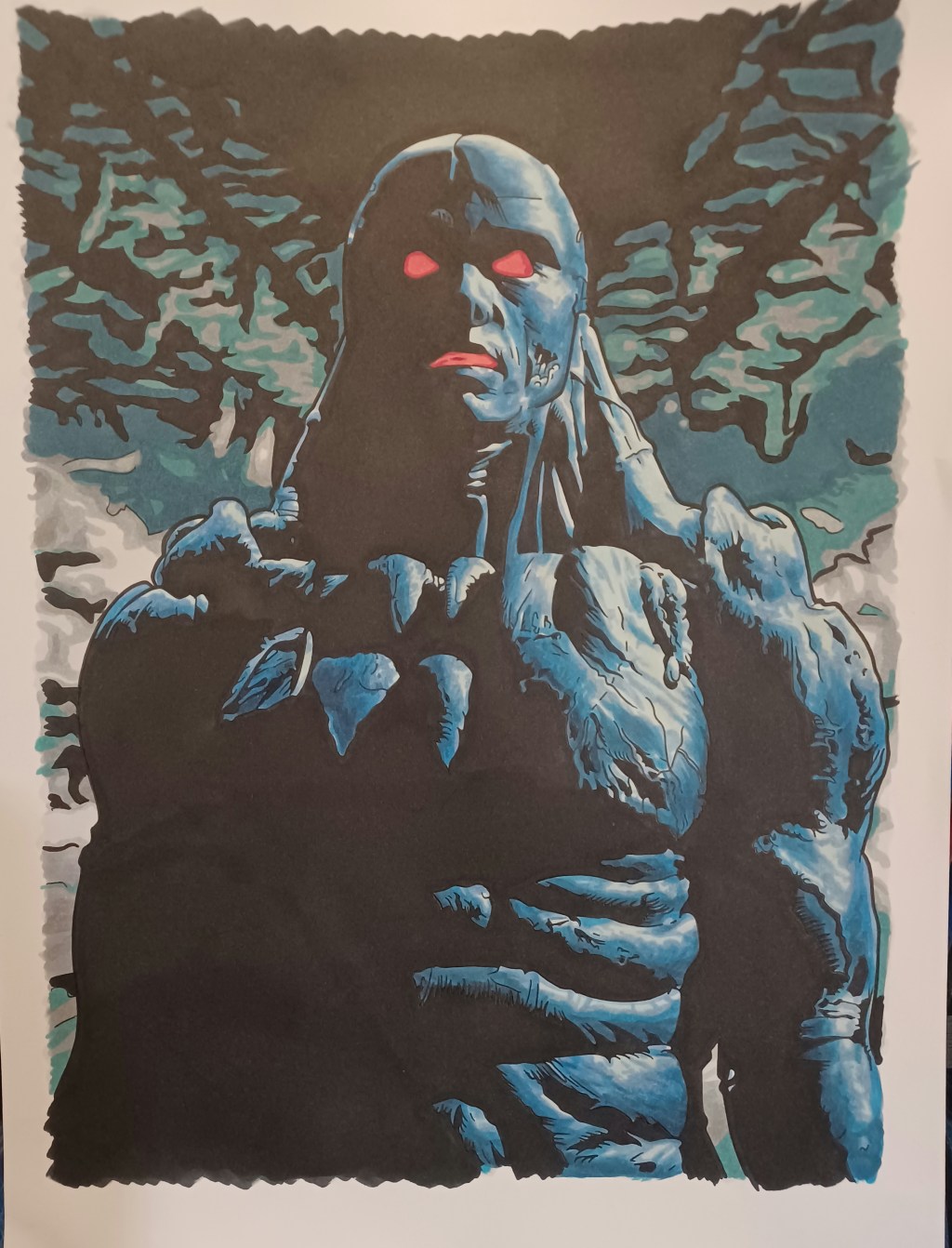
When I was in high school, I was infatuated with a girl who road my bus to and from school. Her name was Kylie. She had strawberry blonde hair, a button nose, the cutest freckles and the smile you could light your way in the darkness.
We had become friends on these 45-minute rides on the school bus that bookended the school day and be talked about silly little things that teenagers do. I remember we both liked Twin Peaks and other odd ball things like Tim Burton movies, black and white horror movies and the moody end of grudge music. It was the 1990s after all.
I wanted to tell her how I felt about her, to ask her out on a date. Mainly because that’s what the movie told me you did. But I was shy and awkward as many of us where at that age with the objects of our affection. But one day, um-ing and arh-ing to myself I suddenly sprang into action and leaped off the bus after her, a good four stops from my own. I told her I liked her, that I thought she was the most beautiful thing I’d ever seen and that I would like to ‘go out with her’. I said all this holding her hand.
After I had finished all this, stuttering worse than Hugh Grant in a romantic comedy, she pulled her hand away, told me I was an ugly loser and that if she went out with me, everyone would laugh at her. She turned and run home. I was dumb stuck. I couldn’t understand her reaction. Well, not then. My heart fell out of my chest and as I stuffed it into my backpack (littering has never been cool with me) and slowly shambled home like a condemned man being led to the hangman’s noose.
When I got home that devastating afternoon, my Mum asked me what was wrong. I had been teased a lot at school in previous years starting all with way back in Primary school and she knew it was a sore spot with me. So, I told her all the while crying. I told her everything. In a sentence I hadn’t expected her to utter, she said, “Let’s go get pizza and videos. Will that cheer you up?” To this day, I don’t know if this was because my mother knew what would bring me out of my funk or that she had no idea how to deal with this trouble kid, and she was just throwing ideas at the wall hoping that the emotionally volatile nutter wouldn’t go off. Well, it worked. I nodded and away the family went for pizza and movies. Now, this didn’t happen very often because for most of the 1990s, while my mother was raising four kids, me being the oldest and most annoying, there wasn’t a lot of money in the household.
We ended up renting 10 weekly movies of which I got to pick five. And I went to the sci-fi section first, then the comedy, I grabbed an action movie and then hit the horror section. And like I always did with the horror section I picked the movies with the best, most eye-catching cover art I could find. I was about to give up and go look at the anime section (which wasn’t that big in the early 90s), then I saw it. A cover with two running figures at the bottom running from a castle that was also the title of the film. All with a black background. It was eerie, dream-like, and a little confusing. I grabbed it instantly. The film was The Keep. And oh boy, did this film leave and impression.
The Keep was released in 1983 and was written for the screen and directed by Michael Mann. That’s right ‘that’ Michael Mann. The same guy that directed Heat, Last of the Mohicans, The Insider, Ali, Collateral and Public Enemies. Hell, he even won an Academy Award.
While he has directed dark material in the past (Manhunter, anyone) The Keep is his only horror film in his filmography. It has a lot of Mann’s signature touches and images and while the film is a little muddled and feel incomplete, it is a story of good versus evil in a grey world and it leaves an impression of whoever watches it.
‘But what is it about?’ you ask. I’ll give you a quick rundown.
The story begins, well, at the beginning. The film opens with a group of German soldiers near the end of World War II arriving at a remote village on the mountain pass in the Romania. Their orders are to establish a base at the keep on the edge of the village and guard against partisans working against the German military. There they are met my Alexandru (W. Morgan Sheppard), the caretaker of the keep. Alexandru tell their leader Woermann (Jurgen Prochnow) that no one has ever stayed at the keep for very long as they are driven out by bad dreams. He also tells Woermann while giving him a tour of the keep that no one really knows when the keep was built and that there are 143 crosses made of nickel embedded in the walls of the keep and they are no to be touched. During the tour Woermann comments that the keep is built backwards with all the larger stone on the inside like it was built to keep something in, not out. Can we say foreshadowing?
Well, something is trapped in the keep as two German soldiers find out that night when thinking a cross in the centre of a large room is silver and try to remove it. They unleash and old evil being named Molasar, a demon like entity somewhere between a vampire and the myth of the Golem. Devise to say the two soldiers die and the haunted house/slasher games begin.
At the same time as this in Greece, a man named Glaeken (Scott Glenn) suddenly wakes up from a dreamless sleep, revealing purple eyes as strange insect like lights fall upon him signalling him to journey to the keep in Romania.
Back in the keep, days have pasted and every night soldiers keep dying. Woermann has send a request to be removed due to the mysterious happenings. Instead of a message in reply, a special SS commando unit lead by Kaempffer (Gabriel Byrne) who is dead set on killing villagers everyday until the partisans killing the German soldiers is revealed. Words are found written on the walls of the keep and to stop Kaempffer from killing another villager, the village’s priest Father Fonescu (Robert Prosky) stays the only person who can read the words is Dr. Theodore Cuza (Ian McKellen), a Romanian Jew who has been sent to a concentration camp with her daughter Eva (Alberta Watson).
They are found and brought to the keep and told to translate the word written on the walls and to research the keep to find out what is killing the Germans. To cut this rundown short, Dr. Cuza makes a deal with Molasar to rid the world of the Nazis if Cuza takes out of the keep the mystical relic keeping him there. Molasar even cures Cuza’s paralysing illness to better aid his mission of removing the relic from the keep to free Molasar. Glaeken shows up after freaking out some German soldiers, has an affair with Eva and does battle with Molasar. The SS commander cannot be trusted and things go to hell.
Honestly, that is not giving the story its due. The story has so much more to it, some many ideas, concepts, visuals and performances contained within its 1h 36mins runtime it would be hard to cover it all without boring the pants off all but the most hardcore of horror film geeks.
The film was based on a novel by F. Paul Wilson and was the first in a series of novels featuring vampires. And while the author didn’t like what the director and the studio did with the film, even going so far as to create a character in a later book of a director who is attacked via voodoo for the filmed treatment of an author’s work, the film didn’t limit itself with anything that had come before or strictly adhering to the source material. But instead altering for the screen story and building on the ideas presented in the novel. And what we get is a dark and twisted fairy-tale that taps into the logic of dreams and the horrors of a Europe in the middle of a world war.
And when I say ‘logic of dreams’, I mean it. The film has a vividness and colour that is almost beyond reality itself. Brightly lit scenes or scenes in daylight give way to darker scenes full of shadow. Seemingly jumping from day to night, sometimes in the same shot. Muted colour pallets give way to bright and vivid colour out of nowhere and visa vera.
The story elements of changing the vampire of the book into a hulking supernatural entity and having it evolve as it kills the German soldiers, first appearing as a truly remarkable smoke effect (seriously, I can’t figure out how they did that one), to a skinless creature to a seven-foot monsters seemly made out of marble with glowing red eyes. Molasar become both a familiar evil and an unknow quantity within the same narrative. The use of back lighting and slow motion in scenes, not only build tension, but coupled it with the musical score by Tangerine Dream, it becomes like a scenario you have yourself experienced in the dream world. The cinematic equivalent to running to for from something in a dream and seemingly running on the spot.
Sometimes it does have a somewhat jarring effect with the audience thrusted into the middle of important scenes and many subplots not fleshed out or dropped completely. This most likely comes from the fact that the studio, Paramount Pictures, not only forced Mann to shot multiple endings but decided to take the director’s cut of the film and cut it themselves, rearranging scenes and cutting 30 mins from the original two hour cut of the film. But I think this does add to the dream like nature of the story. The more you try to figure out the story, decipher it you will, the more like an image of a dream it becomes. Enough of the original intention of the director is left on screen for the audience to delve into the supernatural dreamscape and discover a true gem of one of cinemas great unrealised visions.
After the film was released, Michael Mann was held solely responsible for the film’s failure at the US box office. And has since disowned the film that he was so passionate about when he made it. So much so, he rarely talks about the film at all. In the 1990s it did receive a Laserdisc release, but until 2019-2020, it hadn’t received a DVD release despite it massive cult following. This also had a little to do with the legal trouble concerning rights in other countries, rights issues over the score and other legal odds and ends. It was made worse by the director not helping in the fight to restore and preserve the film.
I don’t know if you know this but many directors, like a lot of artists, often regret decisions they made when working on a film. A great filmmaker once said “Films aren’t finished, only abandoned.” And this doesn’t sit right with some filmmakers like George Lucas or Ridley Scott who feel the need to revisited the films they have made with sequels and prequels or to go back to these ‘abandoned’ films and fix them with the aid of new technologies. But it seems Michael Mann isn’t one of these directors. He seems reticent to revisit The Keep after being burned by the studio and critics back in 1983. Which is a shame for such an imaginative film full if trippy visuals, dripping with blood and atmosphere and full of great performances from some of the greatest actors who have ever stepped in front of the camera. And its not like Mann wasted his time on the film. Many techniques he first used in this film he used in others to great effect. The dream like visions the character of Francis Dollarhyde has in Mann’s follow up film Manhunter are a direct call back to The Keep. And I double dare you to say otherwise
Mann’s attitude towards the film can seem justified in many ways, but if an artist makes something full of heart, soul and imagination and put in out in the world, it will find an audience. And when it does, that ‘thing’ you created is no longer yours. Be then belongs to the audience, the collective ‘we’ who consume it, enjoy it, adore it and have a connection to it. Once your film is discovered it is your job, for better or worse, to support it and embrace what people love about it, even if you disagree with them. And I don’t think anyone really cares if you can to a better job now. In that moment in time when someone watched the film caused a sense of joy, of wonderment and an attachment with the film was formed. It’s the magic of the movies that everyone talks about. It may not be a perfect movie by any stretch. But it doesn’t have to be. It just has to be memorable and entertaining. And many films are not.
I found this movie at a time in my development as a person and as a film geek learning the language of life and cinema, and if affected me in way I couldn’t imagine at the time. I will be forever grateful to Michael Mann, the actors and the crew who filmed this strange little film in Wales for the experience I still love to this day. And also to introducing me to the novels of F. Paul Wilson. Wow, that one kind of got away from me a little. But screw it, I enjoyed writing it. Hope you all liked it.
-
Frank and the Whale.
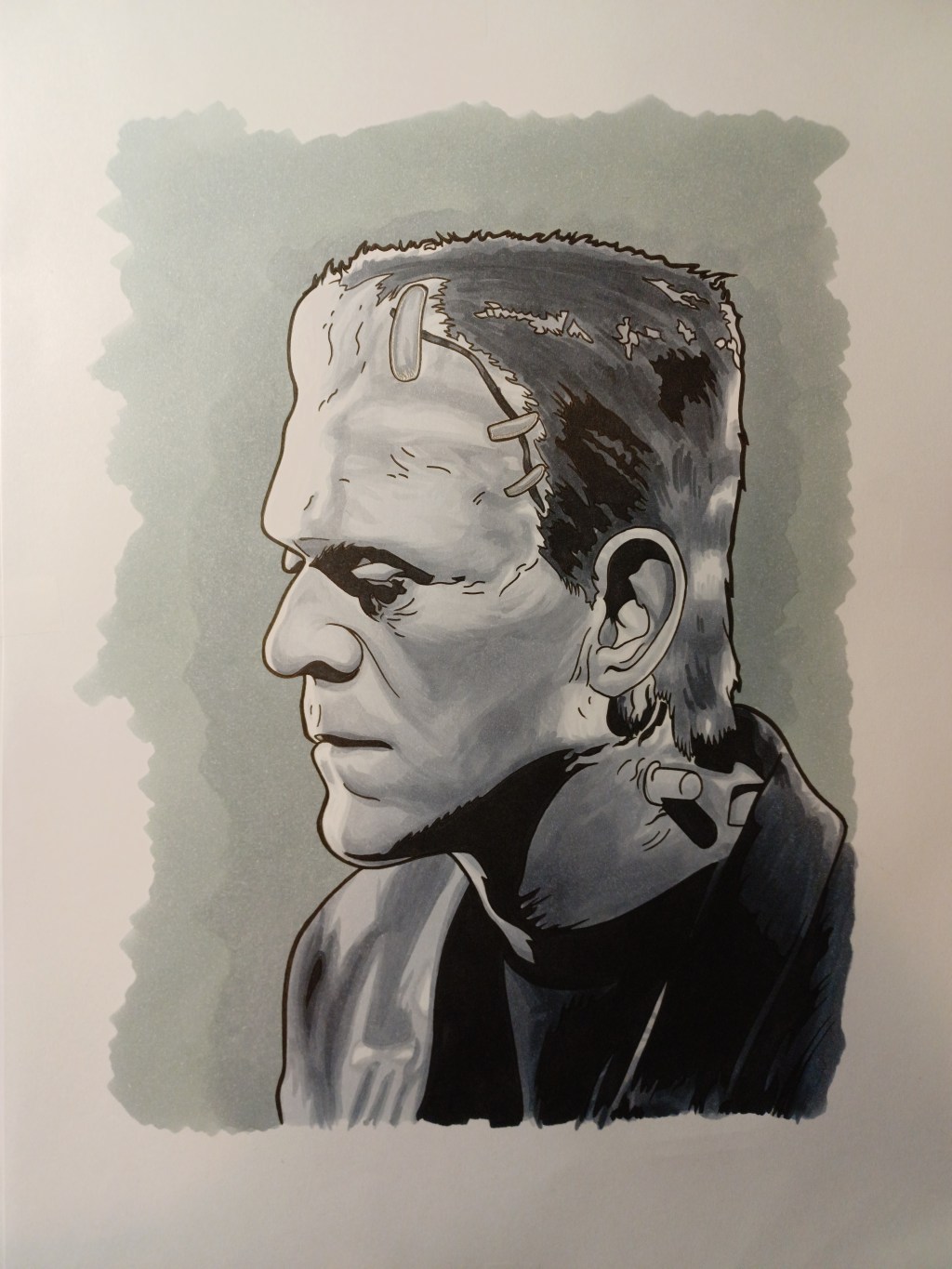
This is a rant I wrote in 2019 when I was writing a diary style blog. I kind of lost interest in the blog after a few family tragedies and I found it hard to write something positive. But this rant was one of my favourite things I wrote for it. So I thought that I would start the reviews and memory awaking through cinema with this piece about James Whale’s two Frankenstein films. Enjoy.
While I was working today, I watched two classic Universal horror films, Frankenstein and The Bride of Frankenstein, both directed by James Whale. Hey, I work from home, it’s one of the perks. Anyway, these two films are much treasured favourites. Like old friends, no matter how long since you’ve seen them, you instantly fall into a comfortable repour.
I always felt for the monster in these glorious black and white films. Stitched together from the parts of murders and thieves, born in great pain, outwardly deformed, immensely strong, and unnaturally big. The very image of a monster. Yet inside he was a kind and gentle soul looking for his place in the world that didn’t understand him and a world he didn’t understand. And as the old adage goes, the villagers feared what they didn’t understand. That fear made him the monster they saw him to be.
I have always loved the character ever since the first time I saw these films when I was in high school. Back then it was before the lost footage was edited back in and the films were re-released. The way James Whale and Boris Karloff (with a little help from Jack Pierce the make up man) presented the monster spoke to me as a teenager filled with teenage angst and hormones. I am sure others felt the same way when they first watched Frankenstein. These films gave me a love of the odd, the different, the discarded, the weird, the lost and the freaks. They became my people. Still are.
Close to the end of the second film, The Bride of Frankenstein, I found myself pausing my work and staring intently at the screen. It was the part where the monster and the bride first see each other. The monster, desperate to love and be love, to find someone like himself, reaches out with a hopeful smile, full of wonder at what his creator had made and compassion for the creation. She looks at him blankly at first, then she screams in horror. The monster had finally found that one other freak like himself and she didn’t want him either.
Doctors’ Frankenstein and Pretorius sit the bride down next to the monster. The monster gently strokes her hand smiling like a child at Christmas. She recoils from him into the arms of Dr. Frankenstein. This also brought up memories of old sitcoms where the female lead’s mother wants her daughter to marry a doctor, instead of becoming one herself. And if there is a sitcom out there revolving around a Dr Frankenstein, his creations, and there on going adventures, I so need to watch it.
All the emotions that I have felt over my lifetime concerning loss, longing, heartache, rejection, depression and the tragedy of life being the oddball round peg in a square world came rushing in at me like a hurricane. I felt all of it. Fear, rage, loneliness and hopelessness.
By the time the monster proclaims, “We belong dead” and pulls that one leaver that destroys the laboratory and the castle (weird how that was there), I was in tears. Ugly, blubbering tears that hurt my stomach muscles and robbed the air from my lungs. It has been I very long time since something has affected me like that and allowed me to release that kind of emotion. In that moment, if consumed me. When I came out the other side, I felt a thousand times better than I had in ages. For this, I thank James Whale and Boris Karloff for giving me these films.
Its one of the reasons I love horror films.
-
Subscribe
Subscribed
Have a WordPress.com account? Log in now.

