Have you ever read or watched something that has stayed with you, but you can’t remember where from? Images, dialogue, a turn of phrase, or a scene from a movie or TV show but that snippet is all you remember? No name, no other story elements, no larger context at all. But these little snippets get stuck in your head all the same. And you are left wondering if they were real at all.
I do. I have many. And a memory that is unreliable at best, compounds the issue. I think they are like a song that gets stuck in your head and the only way to exorcise the demon is to listen to the whole song. The only way to remove the sabots from your mental machinery.
When I was younger, and just starting to read more and more books from the public library (books I wanted to read), I discovered a book with a cool looking cover. A stone angel and a lion on a black background. I added it to my pile of books and journeyed home. I remember the feeling I had when I read this little hard cover book. Exhilaration, amazement, suspense, pure joy and a sense of triumphs upon reading the ending. It was the first time my arse and the edge of my seat met while reading a book.
The thing is, I can’t remember the name of the book or the name of the author. And over time, more and more of the story has crumbled from my memory. I knew it was a fantasy novel taking place on the moon with an angel and a lion. Seriously. And no matter how many google searches and lost hours looking through second-hand book shops, I still an no closer to finding the book. And it’s been well over 30 years (I think) and I would give anything to read it again.
There are, to no one’s surprise, many movies that take up the same fractured space in my head. And over the years I have tried to track down all the movies that these jigsaw pieces fit into. I would like, if I may, take you on a journey into a few of these films that I have hunted down. One I knew was real and one I was convinced I had imagined as a snort nose little kid with an out-of-control imagination.
For the longest time I had a scene of torture in my head. What? Don’t look at me like that. It’s true. It would occasionally play in my head at times of stress, physical pain, or trauma. So, you know, a lot. And I’m not entirely sure where I saw it. Still don’t. It might have been playing on television and I caught the scene while flicking through channels, or I could have seen it a I wandered into the living room looking for my parents one night because I couldn’t sleep and they where watching a VHS rental after the little punks that had ruined their lives had gone to bed. This one is probably more likely.
Anyway, the scene involves a man being surprised in this home by a gang of thugs, led by a guy who looked like Sheriff Rosco from The Dukes of Hazzard. They wanted something this man had and procced to beat and torture him to git it. There where punches and kicks, they burnt his hands with cigarette lighters, and then they ram his hand into the garbage disposal in the kitchen sink and flip the switch, mutilating his hand with the hidden spinning blades.
What stuck with me was that the music didn’t match the visuals. The character that was being tortured was a Vietnam vet who had been tortured in a prison of war camp for many years (this is something I found out later, by the way). And during the torture at the hands of these thugs, he was flashing back to his time in the POW camp. But when the flashback cut back to the present day, the sound from the flash backs would linger in the present. Connecting the past and present trauma of the character. Until the moment his hand was destroyed in that disposal unit. The flashback sounds completely took over the present-day scene. Even the main character’s screams and the sound of the garbage disposal were gone, just the sounds of the past trauma., The pain and the horror of the act present only in the silent scream on the actor’s face. And fuck me, I was traumatised.
The power of the cinematic image to tell a story struck me like a lightening bolt that day and the horror of that moment burned into my little brain. And my imagination turned it over and over for years. Problem was, nothing else about the film stayed. I must have been pretty young when I witnessed this. Which brings more credence to the walking into the living room while a movie was playing scenario. But I never forgot it.
Fast forward to a decade and a half later. Being an unwavering cinephile (or film geek, whatever works) one of the things I love to do it reading film books and tracking down documentaries on film and filmmaking. So, after I watched Mean Streets and Taxi Driver back-to-back, I wanted to track down some more 1970s American films like them to devour. I found a couple of docos on films form the 70s and watched them while taking notes. Yep, I’m that kind of nerd. And can you guess what happened next?
With the likes of Tarantino and Robert Rodriguez were talking about a notorious scene in a 70s film they love, my ears perked up. Then they showed part of the scene in the doco, and time stood still.
Have you ever heard of the Vertigo Effect or the Dolly Zoom Effect? It is an in-camera effect made famous by Hitchcock’s Vertigo and Spielberg’s Jaws. The effect is achieved by the camera zooming into a character or object in the foreground while the camera itself dollies or moves aways from the character in the foreground. Or Visa Versa. During this effect there is a continuous perspective distortion as the background seems to change shape, seeming to stretch to or from the audience. It is often used to visually compound an emotional or intellectual epiphany or discovery. Check YouTube for examples, it’s seriously pretty cool stuff. This is the only way I can describe that moment when I saw that clip. After so long, I found the damned film. And it WAS real.
The film turned out to be Rolling Thunder, a 1977 revenge thriller directed by John Flynn, who would later go on to direct Best Seller in 1987, Lock-Up in 1989, Out for Justice in 1991, and Brainscan in 1994. It was also co-written by Taxi Driver scribe Paul Schader based on his story. I was so in.
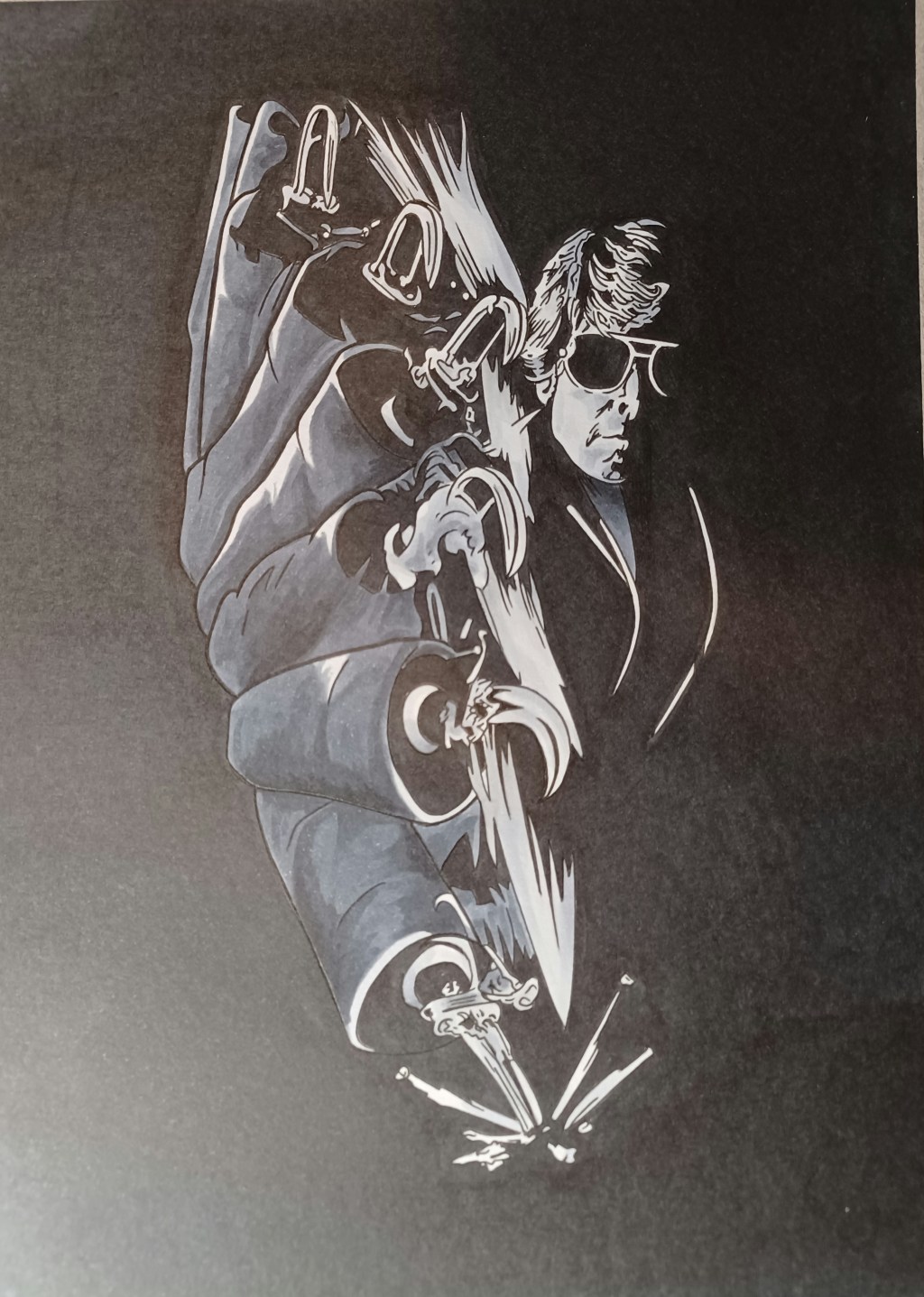
The film opens with our hero Major Charles Rane (William Devane) and his friend Johnny Vohden (Tommy Lee Jones) flying home after being released from a POW camp many years after the end of the Vietnam war. They are greeted as heroes with a big ceremony in Rane’s home town. Rane is even presented with a brand-new car and a massive box full of silver dollars. One for ever day he was away. Rane and Vohden part ways and Rane returns home with his wife and son, whom he has not seen since he was a baby. While his efforts to reconnect with a son who never knew him are successful, his wife on the other hand is a different story. His wife, after Rane was presumed dead, had move on. She informs Rane that she had been engaged to the local sheriff. Rane moves to the tool shed in the back of the house, a place he has converted to a living space. This distances him from his family, but it is a space he feels comfortable in after the trauma he has gone through. He has accepted the new dynamic with a quiet nobility.
Rane distancing himself from his family is a microcosm of the disconnect returning soldiers experienced I think after they came home to an America they didn’t recognise any longer. Rane is now a man out of time. This is a rather sad and melancholic part of the film. He loves his wife and son (like he does his country) but he will always be separated from them. Even though they are still present. This first part of the film is wonderfully shot and the performances are great. Its almost meditative and informs the characters motivations later in the film. Rane is a man of violence who has been changed by violence, living in a world that has moved on from such violence. But Rane is about to be changed by violence again.
After returning home on day, Rane is confronted with a group of thugs waiting for him in his home. A rough and ruthless bunch of bastards led by The Texan played by James Best (turns out it was Sheriff Rosco P Coltrane from Dukes of Hazzard) and this right-hand Automatic Slim played by Luke Askew. They demand the box of silver dollars and say they will torture him to get it. And they do. But Rane says nothing, utters no sound. He has lived with this kind of torture before.
His wife and son return home, they are bullied and threatened. His son tells them where they can find the box of silver dollars and then Rane’s family is gunned down and his hand get the disposal treatment. From here, the film takes on the revenge action thriller aspects it is remembered for. It has many of the same beats you would except as other films in the genre. After getting out of the hospital, Rane now has a hook on his right hand which he later sharpens into a weapon and practises with it so he can reload a gun. And with the help of a waitress he befriends, Linda (Linda Hayes), he sets off to find those responsible.
One aspect of the film that I think is interesting is that Rane isn’t always effective dealing with gathering information and with confrontation when it arises within the narrative. Think how Indiana Jones get his arse handed to him in a lot of fights in his franchise. But darker and more Death Wish-y. At one point he sends Linda into a bar in Mexico to get information and she almost gets raped, Rane having to rescue her. And the antagonists here don’t even know the people Rane and Linda are looking for. He underestimates Automatic Slim and almost gets himself killed. He is too far removed from the violence that had defined him in military service, and it shows. But his single-minded determination pushes him forward. Even abandoning Linda to head off to get his revenge without her. Either because he couldn’t handle here getting hurt or because she is getting in the way.
After tacking them to a brothel in Texas (being led by a man know as the Texan, its not surprising), he enlists the help from his old buddy Vohden who lives in Texas with his family, on one last mission. This is the gore filled climax and it is the film’s major set piece. Our two heroes dress in their military dress uniforms and head to the brothel loaded for bear. They proceed to take out the bad guys in a roaming gunfight through the brothel. And while they are victorious, they are both wounded. But we are left wondering how badly, as the film ends with both men holding each other up and walking out of the brothel surrounded by dead bodies. Que the music and roll the credits. And just so you know, this doesn’t do the finale justice. You just have to see it. It’s worth a look.
The film did leave a lasting impact in 70s cinema and to the action revenge genre, becoming a bit of a B movie triumph. While it wasn’t a massive hit upon release, VHS rentals and cables showing turned it into a cult film. Quentin Tarantino so loves the film that he named his distribution company that specialises in releasing B-movies, cult classics, independent and exploitation cinema and foreign films after this movie. Rolling Thunder Pictures.
Is it a great film? Well, no. Okay, but is it fun? Yes. There are a few story elements and plot holes that don’t go anywhere. Like what happens to Linda after she abandoned. And there is a whole plot thread about the Sheriff (that was engaged to Rane’s wife) hunting down Rane because he knows he is killing people using vigilante justice. That goes nowhere too, ending abruptly . But there is plenty else to keep fans of this kind of film satisfied. The story and acting it top notch, direction is good and the cinematography is solid. While some my find it a little cliched by today standards, just remember many of the clichés weren’t clichés yet. It is a good little flick. While this kind of story has been done better since this film was released, it is very much still worth a watch. Even if its just for William Devane’s career best performance. A great way to spend 96 minutes. And part two, I will tell you about a very different experience and a very different film. Stay tuned.
 Exploiting Wonderland
Leave a comment